



Charles Onyango-Obbo and the Fallacy of Ngugi wa Thiong’o as a Makerere Legacy
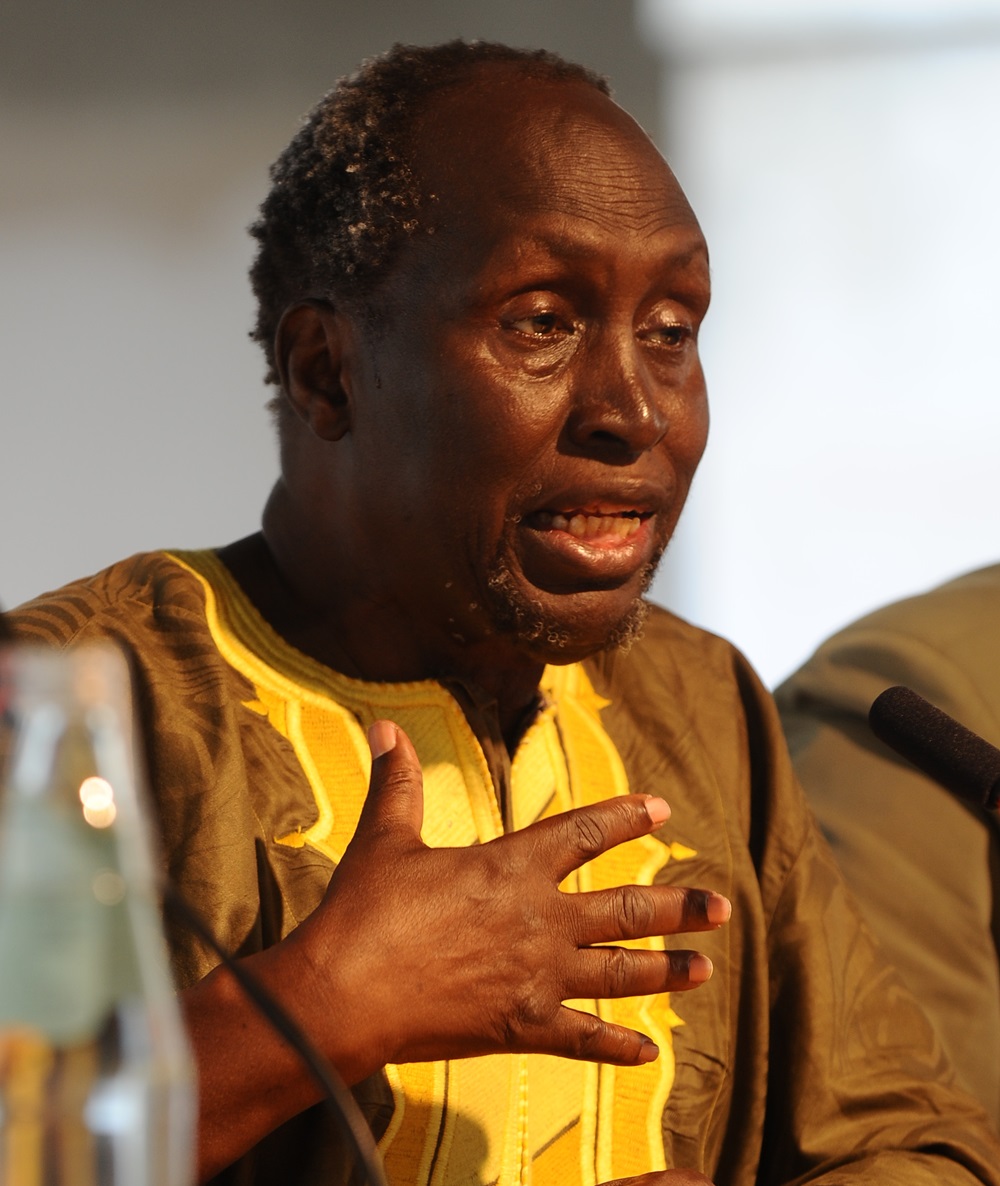

Opicho challenges Onyango-Obbo on the source of Ngugi wa Thiong’o’s revolutionary awakening.
Dear Onyango-Obbo,
This is my rejoinder to the piece you wrote and published in the East African on 7th June 2025. It was under the title, Ngugi wa Thiongó and Makerere Legacy to the world. It was a timely tribute to the late Ngugi. However, I have some disagreements and contradictory observations against your arguments in the article. But this does not mean that I have deliberately riposte unto your stature as a brilliant journalist. My disagreements about what you mentioned in the article are only some solidified versions of the age-long spirit of discourse and counter-discourse as envisaged by the culture of literature and political inquiry.
Onyango-Obbo in the article, you mentioned that Okot P’Bitek studied at Makerere University, you also mentioned that David G. Maillu studied at the University of Nairobi. This was not correct. Specific historicity, biographies, memoirs, and public knowledge evidently confirm that Okot P’Bitek taught literature at Makerere University, but he never studied at Makerere University. In fact, most scholars from East Africa writing on the intellectual formation of Okot P’Bitek in the likes of Laban Erapu used to be puzzled why Bitek never qualified for admission to study at Makerere University, yet his book Song of Lawino, was always studied at Makerere in all areas and levels of social sciences. And why Okot P’ Bitek was a kind of cultural phenomenology for literary theory, which Rene Wellek would have tried to explain through classical concepts of psychology of a writer and ontology of literature. The social experience of Okot P’ Bitek is categorical literary phenomenology we can use to explain the literary excellence of David Maillu, who was mistakenly taken by Onyango-Obbo in the article to be a literature graduate of the University of Nairobi.
Yes, David Maillu the author of the Broken Drum, After 430, My Dear Bottle, TXT Operation, the African Bible and very many other essays, poems as well as short stories is a towering intellectual, passionate Marxist and polished writer who did not study at the University of Nairobi nor go to any college after his high school. Since his early days, David Maillu has had very many books in his house. Those who have ever visited him at his house in Eastern Kenya always came back with one stunning comment: ‘David Maillu has more books than some University libraries’. So, David Maillu is a self-educated scholar, thinker, writer, and philosopher who has a dream to establish the African Open University of Witchcraft Studies in Makueni County in Eastern Kenya. The phenomenality of it all is that, despite scant formal education in literature and social sciences, Maillu had his books studied at high school level, undergraduate level, graduate level and doctoral level of Literature in Kenya, South Africa and Australia. Professors write to Maillu to inform him that ‘we are studying you’.
Contextually, David Maillu and Okot P’Bitek are two practical testimonies that justify the hypothesis by the late Professor Chris Wanjala that self-educated scholars are always the best of their time and for generations. This hypothesis is not only limited to East African literary history and space, it is a universal phenomenon that gets prove in the literary eventualities of global class literary peak performers like Gunther Grass the author of the Tin Drum, Amos Tutuola the author of The Palm Wine Drinkard, and Sembene Ousmane the Author of God’s Bits of Wood. Very many others in the likes of Homer and Shakespeare did not have a lot of formal learning, nor did they go to college. Maybe this can be the juncture in which we can ask a question for literary scholars to answer us: where do good writers get their prowess from? Or to put it in the style and mind of Onyango-Obbo, is literary and intellectual exuberance in the person of Ngugi wa Thiongó a social legacy that Makerere University bequeathed to human society?
I don’t have the answer to the first question, but the answer to the second question is a big NO!... Ngugi wa Thiong’o is not a Makerere legacy; instead, he was a legacy of effective communicative power of communist and socialist ideology through communist literature. The Makerere University during the days when Ngugi was a student could not teach revolutionary literature to make Ngugi the revolutionary the world has witnessed. In fact, Makerere University was a constituent college of the University of London. University of London was an imperialist institution focussed on drum-warming for the colonial and bourgeois culture through imperialist, as well as paternalistic, channels like teaching British literature to African students. It is thus indubitable that at the Makerere of Ngugi’s time, you were only to be taught Jane Austen, the Bronte sisters, Thomas Hardy, W. W. Maugham, Shakespeare, William Thackeray Markpiece, Charles Dickens, T. S. Eliot, and W. B. Yeats. And, if anything for sake of variation, Makerere University would be teaching the American poetry of Walt Whitman. It was from Leaves of Grass, a collection of poems by Walt Whitman, in which there is a queer poem entitled Alone at the Seashore in the Night from which Ngugi wa Thiong’o borrowed a line to use as the title for his first book, Weep Not, Child.
It was only after Makerere that Ngugi met Frantz Fanon through The Wretched of the Earth, an intellectual encounter that birthed in Ngugi the fire of revolutionary consciousness burning him to throw away the name ‘James’ and remain Ngugi wa Thiongó. Six decades later, Ngugi himself wrote in the Globalectics, his 2014 collection of essays, that Makerere could not inspire a revolutionary thought system apart from perpetrating canonicity, a social vice through which cultural imperialism ensures that subaltern cultures are sheepishly loyal to Western bourgeois cultures. In the same collection of essays, Globalectics, Ngugi, doubted Makerere’s commitment to liberation struggle against colonialism by pointing out that even the Famous 1962 Literature and Culture Conference at Makerere was funded by the CIA to spy and collect data on the state of African revolutionary consciousness on behalf of the comprador bourgeoise powers of that time.
Yes, Onyango-Obbo is right, very many post-colonial leaders in East Africa went to school at Makerere University. But their intellectual character is not Makerere’s legacy. Just to mention some: Julius Nyerere studied at Makerere University but his intellectual persuasion was metaphysical socialism; Jaramogi Oginga Odinga studied at Makerere but his intellectual persuasion was confrontational communism; Mwai Kibaki studied at Makerere but his intellectual persuasion was reformist capitalism; Milton Obote also studied at Makerere then, and went on to become the President of Uganda. During his presidency, he came up with a public governance ideology known as the common-man charter, which was simply some euphemism for African communism in Uganda. Yes, Karl Marx himself would have laughed all of them away and even dismissed some of the above East African post-colonial politicians as Lassalleanist, Prosaic Socialists, or Blangui (cosmetic) socialists. Just the same way Vladmir Lenin would have dismissed all of their philosophical arguments as revolutionary garbage. But still the centre holds, and any philosophical common sense would tell us that they all had a common weapon of theory informed by Marxism. This is the point in logic at which we fault Onyango-Obbo by pointing out that the East African post-colonial leadership in cultural and intellectual space was not a Makerere Legacy, it was a Marxist legacy.
By the time of writing this article, I had read in different newspapers and websites, as well as blogs, all the tributes on Ngugi wa Thiong’o that had poured in for the past two weeks since he passed on. I discovered that different people paying tribute to Ngugi were the people who did not understand Ngugi. I did not come across the tribute by Ngugi’s age mates in the likes of Wole Soyinka, Lapan Erapu, Taban Lo Liyong’o, Timothy Wangusa, Alamin Mazrui, Issa Shivji, and Okello Oculli, as well as many others that wrote and published their books with Heinemann's African Writers Series in just the same way as Ngugi had to write and publish in the late part of the last century. It was evident to me that most of the tribute makers were middle aged journalists and lecturers of literature devoid of complete knowledge on Ngugi as a teacher, a husband, a prisoner, a writer, a revolutionary, a dramatist, and serial prize winner. Apart from the tribute written in the Guardian by Ben Okri, and another one written in the East African Standard by Wafula Buke, ninety percent of the rest of the other tributes to Ngugi were just as shallowly informed about Ngugi as that of Onyango-Obbo. They could not go beyond Ngugi as an Author of The River Between, Weep Not, Child, and The Grain Wheat, and Ngugi as a person campaigning for Africans to write in African languages. They could not mention those revolutionary fireworks by Ngugi in the likes of Writers in Politics, Wizard of the Crow, Petals of Blood, the Devil on the Cross, Black Hermit, Njamba Nene the Cruel Chief, Ngugi Detained, Language of Languages, Decolonizing the Mind, the Perfect Nine, the Upright Revolution, Homecoming, Globalectics, Matigari, Trial of Dedan Kimathi, Nghaika Ndeenda, Mother sing for Me, in the Name of the Mother, Dreams in Times of War, Africa, essays in Granta Magazine, foreword in the Thirteenth Sun and most touchingly, the Afterword in the Imprisoning the Revolution, an anthology of writings by a thousand Egyptian political prisoners published by Antigone Collective in May 2025, the same month in which Ngugi died.
I hope I have not failed to uphold my respect for your work as a veteran practitioner of thought-leadership, honourable Elder, Onyango-Obbo.
Yours, Alexander Opicho
Alexander Opicho is at the Regional Centre for Mapping of Resources for Development (RCMRD), Nairobi, Kenya.