



Nubian, Communist, Writer: The Revolutionary Voice of Mohamed Khalil Qaseem, Part 2: Al-Shamandurah: An Artistic Journey
Diallo explores the political significance of Qassem’s literary output and his legacy
The Novel and the Detention Centre
Qassem wrote prolifically during his detention. He translated the writings of Polish-American political scientist and policymaker Zbigniew Brzezinski. He wrote poems that were published in an anthology titled Qassāid Masriah [Egyptian Poems], together with Zaki Murad, Kamal Abdelhalim, Mahmud Tawfiq, and Palestinian poet, Moein Bseissou. He published a second anthology, titled Sirb Al-Balashun [A Flock of Herons], along with a group of Nubian poets (namely, Mohamed Shindy, Zaki Murad, Abdedaim Taha, and Ibrahim Shaaraoui). Qassem deemed prison to be a venue where he could teach people and learn from them. He taught illiterate jailers to read. Word quickly spread to other detention centres and soon jailers asked to be transferred to Al-Wāha detention centre, where Qassem and Communist inmates offered literacy classes. Qassem served as the headmaster of this school and he supervised the education process ably until his jailers came to call him the Honourable Headmaster. Together with his comrades, he likewise set up a stage, where he presented a number of plays.
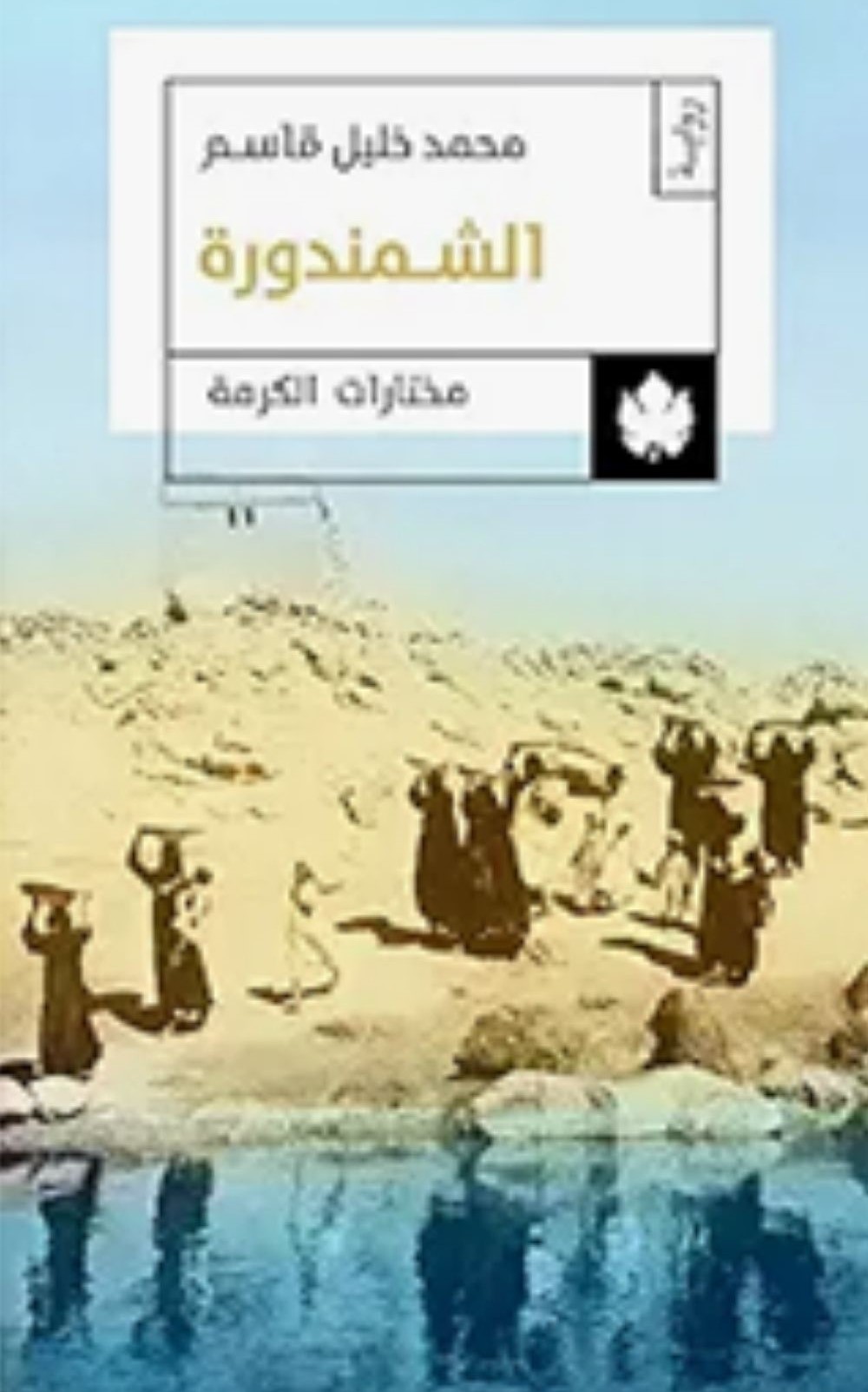
While in detention, Qassem also completed his most important literary work, the novel Al-Shamandurah [The Buoy], which had been germinating for a long time. Between 1946 and 1961, Qassem had stayed up long nights for months, maybe years, by candlelight, writing on small Bafra sheets, a cigarette wrapping paper. The Haddato Central Command provided Qassem with all the means necessary to complete the writing of Al-Shamandurah, relieving him of all party responsibilities, allocating a single room to him to write his novel, and providing him with tea and cigarettes.
Qassem endured all of this because he wanted to immortalize the lives of his people in the first novel ever written about Nubians in history. Although the novel centres on the predicament of one Nubian village, Qatta, it presents a comprehensive picture of Nubian life and the suffering endured by various Nubian villages. Al-Shamandurah revealed the world of a Nubian village, its struggle with nature, injustice, oppression, and the flood. Qassem arranged the events in an easy and simple style that was nonetheless poetic. The descriptions are enlivened through dialogue between the protagonists.
With his political awareness and revolutionary thought, Qassem was able to connect the local struggles of the Egyptian countryside and Nubian villages, on the one hand, and the macro-level battles against colonial oppression and tyranny, on the other hand. The flood itself came to be viewed as a social catastrophe created by the ruling class. Tragedy is at the centre of Al-Shamandurah. The novel is the first Nubian literary work to depict the disaster of the flood candidly, and the Nubian community’s larger struggle for survival.
Al-Shamandurah: An Artistic Journey
In his epic novel Al-Shamandurah, Qassem unveils the world of the Nubian village through a comprehensive exploration of its depths, and its struggle with nature, oppression, tyranny, and the flood. He arranges events in an orderly manner using simple, poetic language that pulsates with life and realistically expresses the spirit of the Nubian village.
Through dialogues rooted in the earth and the Nile, Qassem, with his artistic skill and profound abilities, masterfully balances the distribution of roles and conflicts within the village, precisely delineating when these conflicts diverge or unite, and in which axes of struggle they converge or differ. While writing the novel, Qassem held deep within his heart and consciousness the image of the Nubian human and the collective memory of the Nubian village, which materialized in his childhood experiences and direct participation in its events. He expressed this with simple yet profound phrases that embody the life and longstanding civilization of Nubia spanning centuries.
With his political awareness and revolutionary thinking, Qassem succeeded in weaving the threads of a common struggle grounded in social conflict between rural Egypt and Nubian villages against colonial oppression, injustice, despotism, and feudalism. This struggle is embodied in the fight against the flood that devastated the Nubian villages - a social catastrophe manufactured by the ruling class.
This is the essence of the novel: exposing the falsehood of the idea that the flood was a "divine fate" that could not be avoided, and dismantling this deadly belief that made misery appear eternal and resignation an inevitable destiny for the impoverished, who were denied the right to a decent life. If Al-Shamandurah is the first Nubian literary work to unveil this painful reality with all its honesty, portraying this deadly struggle for survival, it is also a revealing document of the lives of Nubians who lived for long periods in isolation and misery, as part of the larger fabric of society.
In the 1930s, the grip of colonialism, police, and feudalism tightened its hold over power, extending control beyond the Nile Valley and Delta to encompass the lives of Nubian villages, their land and people.
During the reign of Ismail Sedky Pasha, the Egyptian village transformed into a two-class society: executioners and the wretched, confronting the ambitions of colonialism and feudalism. It became imperative to expand agricultural land for the pashas and seize control of the Nile’s water at its source. In the 19th century, this ambition sparked large-scale projects, such as the construction of the Aswan Dam (1960-1970), an investment project designed to tame the Nile and utilize it for the ruling class's interests.
Dams were built in the same way that commercial banks are constructed — no difference between vaults holding millions in securities and the Nile’s reservoir holding billions of cubic meters of water, distributed at the whims of the pasha and his aides, while Nubian villages suffered displacement, migration, and flooding.
Although the Nubian farmer did not experience feudalism directly on his land as did the farmers of the Delta and the northern regions, the lashes of the feudal pashas did not spare him; they extended to scorch his back. Northern farmers endured forced labour and displacement, trading obedience for subsistence, while the Nubians also bowed, but in their own way, some elders bent so low before the pashas and feudal lords in their palaces and compounds that they almost crouched to the ground. The Nubian was reduced to a being for amusement and mockery in their mansions, closer to inanimate statues or antiques kept for decoration.
The flooding disaster, manufactured by colonial ambitions, was not merely a natural accident but a long epic of struggle with all its torture, sacrifices, forced labour, and social catastrophes. Through this shared reality, Muhammad Khalil Qassem linked the struggles of Nubian villages with those of the Delta and Nile Valley villages during that era, accurately depicting in his novel this bitter conflict with nature, life, and the flood.
The Nubian villages lived among palm groves and fertile fields, where their people enjoyed stability and confidence in the land’s abundant bounty. However, the Aswan Dam destroyed these villages, and immense sacrifices were made for the sake of greenery. The battle continued until modern times.
The government then declared: “We will not flood the Nubian land; the water level will rise only for a few days.” The kind-hearted, unsuspecting people trusted these words. But it soon became clear that this was a deception by the government and colonial authorities to deflect compensation claims. The tragedy became apparent when the villages realized the flood was imminent in just a few days. On May 15, 1933, only three days remained before the catastrophe. Protests spread across the villages, and tens of thousands of complaints and telegrams demanded the postponement of the flood.
Yet the state ignored them, and the great disaster struck. The flood rose like a ferocious beast, roaring and sweeping through the land, swallowing villages one by one, while the people stood in shock. Eyes froze in fear, bodies trembled, palm trees and other trees shook wildly, and waters mercilessly invaded the land. Many fled in terror; many others could not survive.
Despite the pain, a spirit of hope for return persisted in the hearts of the Nubians. They lived poor but dignified. They became displaced but never forgot their villages. Life continued on higher ground, sharing hunger and tragedy after fertile lands turned barren, social bonds were severed, and early migration began toward cities, Upper Egypt, and abroad from the 1940s onward. Yet, they never abandoned their villages, continuing to send donations to build schools, mosques, and homes and efforts to revive what had been crushed by the flood and colonial crime.
Women in Qassem’s Al-Shamandurah actively participated in decision-making and played prominent roles in the novel’s fabric, especially after the flood. They bore full responsibility following the forced absence of men, who were driven, by the floods, away from their wives to seek work elsewhere. The women took up the axe to cultivate their land, climbed palm trees, alongside managing household chores and caretaking.
If the environment that the Nubian people lived in after the flood was bleak and harsh, then it was inevitable for Nubian women to prepare continuously to face it. No reader can ignore or forget the shining names and prominent roles of women in the novel: Draya, Fatima, Amina, Saadia, and others.
I do not exaggerate if I say that Al-Shamandurah, in the history of realistic literature in Africa, offers a set of answers worthy of extensive studies. There is no single conscience, nor a sole hero. Stream-of-consciousness exists alongside direct realistic narrative. The poetry of reality emerges not from language itself, but from that authentic and profound vision of the pressing needs shaped by people's daily lives.
The sweeping transformations of the era with all their ruptures and upheavals represented, for Muhammad Khalil Qassem, the most profound of crises. As a former leading figure in the party and an active participant in shaping its policies, he now found himself facing a stark and unfamiliar reality. How could someone who had spent his entire life immersed in political and party work adapt to a new order governed by a new logic?
Qassem experienced a deep sense of alienation and disorientation amid this strange atmosphere, as the structured leadership of the party dissolved and the unified effort to address the people's struggles collapsed. The party, once a force that inspired collective will, fervour, and connectivity, had become a shell of its former self. And when a few comrades attempted to rebuild the bridges and rekindle the spirit, the so-called "solution comrades" threatened to crush every nascent dream—lest it trouble the allies of power in those days.
Out of prison, Qassem was soon besieged by the harsh realities of daily life: work, housing, and basic subsistence—despite the regime’s promises to resolve these issues for all former detainees. Those promises, however, were selectively fulfilled; only a handful of prominent figures were granted positions that reflected their stature. The rest, especially former communists, were met with marginalization and neglect, deepening their bitterness and exacerbating their daily struggles.
Nonetheless, after a long and arduous journey, Qassem managed to carve out some stability. He secured a job as a translator at the East German Embassy and obtained a small apartment in Bulaq al-Dakrour, a district that had become a refuge for those in search of affordable shelter. He opened his heart—like a father and elder brother—to his small family: a younger brother and sister (not his biological siblings), while his two biological sisters lived with their respective families, one in Cairo and the other in Luxor.
The Founding of the Nubian Literary Club
It was as if Qassem sensed that his life would be brief. He raced against time, pouring all his remaining energy into his literary and cultural endeavours. Having completed his magnum opus, Al-Shamandoura, he had many other works awaiting completion. His nature, inclined away from solitary labour, made him a firm believer in collective action.
Qassem played a central role in founding the General Nubian Literary Club, seeking to spread his cultural message through its activities. He offered his time and support generously, becoming a foundational pillar of this budding literary and artistic institution. From its earliest days, Qassem embraced the literary and artistic talents of a new generation in search of a space to express themselves.
Thanks to his efforts, the club became a vibrant hub for young Nubian talents and a source of hope for many. Weekly seminars drew large audiences and forged deep connections between generations passionate about literature and the arts. The club’s activities extended beyond Nubian youth, fuelled by an aspiration to make it a welcoming home for all writers and creatives.
The club’s initiatives included storytelling, poetry, music, theatre, literary criticism, and Nubian music and song. What made the experience unique was that the youth themselves led and organized the gatherings in an open, democratic dialogue that often stretched into long hours of reading and discussion. The club functioned as a free school for aspiring artists and writers.
A central tradition of the club was its emphasis on understanding diverse intellectual and literary schools, and on respecting differing opinions no matter how sharp the disagreements. In this space, Qassem became a key figure in reviving the very idea of a Nubian literary institution. The club’s president, Hajj Imam, opened his heart to Qassem, treating him as a devoted son and relying on him to help draft numerous memoranda outlining the pressing concerns of the Nubian people, documents that were presented to government officials.
The club's momentum continued even after the passing of its driving force, Muhammad Khalil Qassem, and remained active into the mid-1970s. Unfortunately, political rivalries later intervened to dismantle the project. Certain figures within the club’s administrative council engineered crises, questioned the legitimacy of its activities, and demanded relocation to a different venue. As a result, the club’s journey was derailed, and its path came to a halt.
The End of the Journey
On 10 June 1968, Qassem passed away after suffering a severe heart attack in his home in Boulaq Ad Dakrour. His funeral was attended by Nubian mourners and ordinary people, alongside intellectuals, writers, and journalists. A touching sight was the presence of his students—those he had taught to read and write in prisons and detention centers bidding him a final farewell. His funeral procession departed from the Nubian Club in downtown Cairo. Forty days after his passing, a memorial service was held at the Chamber of Commerce in Bab El-Louq, where the renowned writer Youssef El-Sebai delivered a eulogy in his honor. After Qassem’s departure, death swiftly claimed the rest of his family. His elder sister, who had been like a mother to him, soon followed.[1] His younger half-sister, afflicted by uremia, also passed away. His half-brother, devastated by addiction, wandered the streets of Cairo until his final days.
With the loss of Qassem Hamd Khalil Qasim, the committed communist who loved his homeland and people, and who dedicated his life to the causes he believed in, a beacon of resilience was extinguished. Honouring his memory must begin with the effort to republish and translate Al-Shamandurah, a work that remains unparalleled in the history of Nubia, as well as in Egyptian and African literature.
Kribsoo Diallo is a Cairo-based Pan-Africanist researcher in political science related to African affairs. He has written for many African magazines and newspapers, and Diallo has contributed to translated editions of papers and articles in Arabic and English for several research centres within the African continent.
*A version of this piece and part 1 was published in Souffles Monde.[2]
Endnotes
[1] Sami Mustafa – "Mohamed Khalil Qassem and Nubian Resistance Literature," Arab Conference on Resistance Literature, Cairo, 2007.
[2] The version published in Souffles Monde is available at https://www.soufflesmonde.com/posts/al-shamandura-the-buoy-a-nubian-com…
Further Reading
Nasser Abdel Hamid – "A Critical Reading of Mohamed Khalil Qassem’s Novel Al-Shamandora," Al-Thaqafa Al-Arabiya Journal, Issue 120, 1995.