



Afrikan Football Economies: Subsidising the World
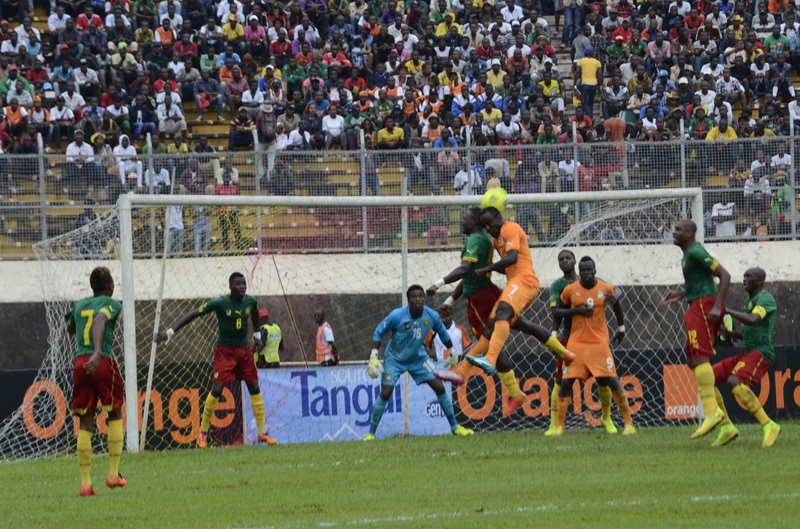

Pheko critically assesses the political economy of football, the production and capture of value and Africa’s place in the football business. Afrika produces world-class football capability but the institutions that commercialise, govern and retain the game’s greatest economic value remain concentrated elsewhere.
This article is the fourth contribution in a developing body of work on the political economy of global football.[1] This article shifts attention from labour production to the institutional mechanisms through which football value is accumulated and retained.[2] Earlier papers in this series have examined the social production of football labour through the enclosure, commercialisation and financialisation of football through “The Great Enclosure: How Global Capitalism Broke the People's Game”;[3] and the geopolitical architecture of FIFA, borders and racial capitalism through “Fortress Football: Empire, Anti-Blackness and the Capture of the Beautiful Game”.[4] The present article builds on these earlier contributions by examining how the value generated through Afrikan football capability is accumulated, commercialised and retained within the global football economy.
Scholarship on Afrikan football has increasingly moved beyond celebratory narratives of sporting success towards more critical analyses of football as a political, economic and institutional system. Rather than treating football simply as a cultural phenomenon or a source of national prestige, scholars have located Afrikan football within wider histories of colonialism, labour migration, commercialisation and global governance.[5] Much of this scholarship, however, begins with migration or professional contracts, asking why Afrikan players leave domestic leagues, how recruitment systems operate, and what migration means for players and national football systems.
Recent work has argued that the contemporary football economy cannot be understood solely through transfer markets or sporting competition but must also be analysed through empire, racial capitalism, securitisation, institutional ownership and global governance.[6] The central issue is therefore not participation but power: who owns the institutions through which value is accumulated, governed and retained.[7]
Current Afrikan-centred scholarship has begun to pose a different question. Gerard Akindes asks whether Afrikan countries can dominate global football while progressively losing control over their own game, locating contemporary football within longer histories of globalisation, commodification and institutional dependence. By "losing control of the game," Akindes refers not simply to player migration but to the progressive externalisation of football governance, commercial rights, institutional decision-making and value capture despite Afrika's growing contribution to the game's talent base. This framing is particularly valuable because it avoids two common simplifications: the romantic assumption that global football is primarily a story of opportunity, and the equally reductive claim that Afrikan players are merely victims of exploitation. Instead, it directs attention towards the institutions that organise the global game.
The primary focus of this article is football capability produced and developed on the Afrikan continent. While players of Afrikan descent born and developed outside the continent constitute an equally important dimension of the global football economy, their political economy raises distinct questions of citizenship, migration, racialisation and identity that lie beyond the scope of this article. This article argues that the central distinction is not between exporting and retaining footballers, but between the production of value and the capture of value. This distinction between producing value and capturing value has become increasingly important within contemporary Afrikan political economy, particularly in debates on unequal integration, industrialisation and structural transformation.[8]
Afrikan societies produce a substantial share of the human capability upon which the global football economy depends, yet the institutions that accumulate, commercialise and retain the greatest economic returns remain concentrated elsewhere. The central developmental question is therefore not simply why Afrikan footballers migrate, but why Afrikan football economies continue to occupy labour-intensive positions within one of the world's most profitable sporting industries while ownership of its most lucrative segments remains geographically concentrated.[9]
Football is therefore examined here not merely as a sport but as an industrial ecosystem. Like other global industries, it encompasses broadcasting, finance, sports medicine, data analytics, artificial intelligence, legal services, merchandising, hospitality, tourism, betting, intellectual property and digital media. Understanding football in this way shifts attention away from transfer fees alone towards the wider institutional architecture through which economic value is generated, accumulated and retained.
Drawing on political economy, global value chain analysis and decolonial scholarship, the article argues that Afrika's contribution to world football extends well beyond the export of talented players.[10] It contends that Afrikan households, communities, schools, coaches, academies and public institutions make sustained investments in producing football capability, while the greatest commercial appreciation increasingly occurs through the institutional architecture of football and financial institutions located elsewhere. In this sense, Afrika subsidises one of the world's most profitable cultural industries while capturing only a limited share of the wealth generated through that subsidy.
The article proceeds in four parts. It first examines football as an industry of accumulation and distinguishes between the production and capture of value. It then explores Afrika's hidden subsidy to the global football economy through migration, social reproduction and institutional investment. The third section analyses the institutional architecture through which football's economic value is accumulated and retained. The article concludes by considering what a developmental strategy centred on institutional ownership, regional value capture and industrial policy might mean for the future of Afrikan football industries.
Accumulation, Value Capture and the Afrikan Football Economy
Political economy distinguishes between the production of value and its capture. The two are not synonymous. Countries may produce indispensable commodities while retaining only a small proportion of the wealth generated through their circulation. Unequal integration into global markets continues to position Afrikan economies within labour-intensive stages of production while the highest returns accrue elsewhere through ownership and governance.[11]
Research on global value chains and global production networks has consistently shown that the highest returns increasingly accrue through ownership, branding, finance, intellectual property, logistics and control over distribution rather than production alone.[12]
Nicolas Pépé, Sadio Mané, Naby Keïta and Victor Osimhen did not become some of the world's most valuable footballers overnight. Long before Osimhen’s record transfer to Napoli for example, his footballing capability had already been patiently assembled. It had been nurtured through years of family care, neighbourhood football in Lagos, local coaching, school competitions, community support and the Nigerian football system Napoli did not purchase "raw talent"; it acquired nearly two decades of accumulated social investment whose greatest commercial appreciation was still to come. This distinction between the social production of labour and its subsequent commodification echoes broader analyses of racial capitalism and social reproduction.[13]
Every time we watch a UEFA Champions League match we see twenty-two footballers on the pitch. What remains largely invisible are the thousands of workers whose livelihoods depend upon those players: physiotherapists, sports scientists, nutritionists, performance analysts, software engineers, broadcasters, journalists, lawyers, hotel workers, event managers, data analysts, betting companies, sportswear manufacturers, artificial intelligence specialists and digital media professionals.[14]
The global football economy is now estimated to generate well in excess of US$60 billion annually, while European professional football alone generated approximately €38 billion during the 2023/24 season.[15] The five largest European leagues account for the overwhelming share of broadcasting income, commercial sponsorship, merchandising, hospitality, licensing and global media revenues. Afrikan footballers contribute substantially to this commercial ecosystem. Players from Nigeria, Senegal, Morocco, Ghana, Côte d'Ivoire, Mali, Cameroon, Algeria and South Afrika feature prominently across Europe's leading competitions, while Afrikan-born and Afrikan-descended players have become indispensable to many of the world's most commercially successful clubs.[16] Their performances generate value that extends far beyond wages and transfer fees, contributing to television audiences, global merchandising, sponsorship contracts, digital engagement, tourism, betting markets, licensing agreements and club valuations.[17]
The central question is therefore not whether Afrikan footballers are rewarded. Many are among the world's highest-paid athletes. Political economy asks a different question: which institutions capture the greatest share of the wealth that football generates? The answer lies in football's institutional architecture.
Elite clubs own the contracts through which player value is realised. The footballer constitutes only one participant within a much larger architecture of accumulation.[18] Broadcasters own the media rights through which global audiences are monetised. Sportswear corporations transform athletic excellence into global consumer brands. Data analytics companies convert player performance into proprietary information and commercial products. Betting companies derive profits from football's uncertainty, while digital platforms monetise fan engagement through subscription services, advertising and algorithmic visibility. Companies such as IMG, Infront, SPORTFIVE, CAA Sports and other commercial rights agencies broker media rights, sponsorships and marketing agreements worth billions.[19] Governing bodies establish and regulate the rules through which these markets operate, while sponsors transform sporting visibility into commercial advantage.[20]
The footballer remains indispensable to every one of these activities. Yet the footballer constitutes only one participant within a much larger architecture of accumulation. Increasingly, the highest returns are generated not on the football pitch itself but through ownership of the institutions that organise, finance, commercialise and govern the game.
This institutional geography is itself changing. European clubs continue to dominate the global football economy, but Gulf capital has become increasingly influential through investment in clubs, broadcasting rights, sponsorship, talent development and international competitions. Qatar's Aspire Academy has invested extensively in talent identification programmes across Afrika, while Gulf-based broadcasters and sovereign wealth funds have become increasingly significant actors in global football governance. Long-term broadcasting agreements between the Confederation of Afrikan Football (CAF) and beIN Media Group, together with the staging of major Afrikan football competitions in Saudi Arabia, illustrate that the political economy of football can no longer be understood solely through an Afrika-Europe relationship. Contemporary football increasingly operates through interconnected circuits linking Afrikan talent, European institutions, Gulf capital and international governing bodies.[21]
Scarlett Cornelissen's work on sport mega-events provides an important analytical lens for understanding these developments. Rather than treating sport as entertainment, she demonstrates how global sporting events are deeply embedded within processes of statecraft, geopolitical competition and capitalist accumulation. Football therefore functions not merely as a cultural spectacle but as an arena through which states, corporations and governing institutions pursue broader economic and political objectives.
This wider perspective also helps explain why Afrikan domestic leagues continue to struggle despite the continent's extraordinary contribution to global football talent. As Gerard Akindes (2023) argues, Afrika has become increasingly integrated into global football while remaining structurally disadvantaged within its most profitable segments. Similar patterns are evident across global value chains where the Global South supplies labour-intensive activities while higher-value functions remain geographically concentrated.[22]
Afrikan participation is extensive, but it remains concentrated within labour-intensive stages of the football value chain, while ownership of broadcasting, finance, commercial rights, intellectual property, data and global media remains disproportionately located elsewhere.
The developmental challenge therefore extends beyond player migration. It concerns industrial organisation. Europe and, increasingly, parts of the Gulf have spent decades constructing dense football ecosystems comprising professional coaching, sports medicine, biomechanics, nutrition, artificial intelligence, performance analytics, legal services, financial management, sports broadcasting, marketing, hospitality and advanced event management. Football has become a sophisticated industrial cluster whose economic significance extends far beyond the game itself.
This insight has received insufficient attention within Afrikan development debates. Football is also a strategic economic sector capable of generating employment, technological innovation, advanced manufacturing, tourism, creative industries, research, financial services and regional industrial development.[23] Exporting footballers therefore represents only one component of a much larger football economy.
The strategic challenge is not to reduce migration but to reposition Afrikan football economies within the higher-value segments of the industry's global value chain. This requires investment not only in players but also in domestic leagues and the wider commercial and technological ecosystem that surrounds the game and regional sports manufacturing. It also requires stronger institutions capable of negotiating media rights, enforcing solidarity payments, protecting young players and retaining a greater share of football's economic surplus within Afrikan economies. Such an approach resonates with contemporary debates on industrial policy, productive transformation and developmental states in the Global South.[24]
Afrika's Hidden Subsidy to Global Football
The scale of Afrika's contribution to global football is no longer anecdotal. It is measurable. The subsidy identified in this article is not a fiscal transfer. It is a structural subsidy. It consists of the sustained production of football capability whose greatest commercial appreciation occurs elsewhere through institutions largely owned, governed and financed outside the continent.
Recent data from the CIES Football Observatory (Centre International d'Étude du Sport) show that international football migration continues to expand. According to the CIES Football Observatory, the 135 men's professional leagues included in its global database contained 14,405 expatriate footballers drawn from across the world. Within this global labour market, Afrikan countries are among the largest exporters of football talent. Nigeria, Senegal, Morocco, Côte d'Ivoire and Ghana consistently rank among the leading countries of origin, while more than 500 Afrikan footballers were active in Europe's eleven largest men's leagues during the 2021/22 season alone.[25] These players constituted approximately 6 per cent of the total first-team player base, illustrating the structural importance of Afrikan labour within elite European football. This demonstrates not only the scale of Afrikan participation in the global football economy but also its structural importance to elite professional football.
These figures demonstrate the scale of Afrikan participation in the global game. They do not, however, explain the geography of economic benefit. Migration statistics tell us where players move; they reveal much less about where football's economic value is ultimately accumulated and retained.
It is therefore difficult to place an exact monetary value on Afrika's contribution because much of that investment takes forms that conventional economic accounting rarely records. The production of football capability depends upon years of unpaid and underpaid care, community investment, public expenditure, local coaching, school sport, municipal infrastructure and family sacrifice. These investments are dispersed across households and institutions long before a player enters the professional transfer market.
Yet the commercial value generated by that capability is substantial. European professional football generated a record €38 billion in revenue during the 2023/24 season, with the five largest European leagues accounting for more than €20 billion through broadcasting rights, sponsorship, commercial partnerships and match-day revenues. Afrikan footballers contribute significantly to this ecosystem. While football's wealth is jointly produced by clubs, coaches, supporters, broadcasters and commercial partners, Afrikan human capability remains deeply embedded within one of the world's most profitable cultural industries.[26]
The transfer system provides another way of understanding this imbalance. FIFA's solidarity mechanism acknowledges that player development is cumulative by allocating up to five per cent of an international transfer fee to clubs involved in training a player between approximately the ages of 12 and 23. This represents an important recognition that footballing excellence is socially produced rather than individually created.
At the same time, the mechanism illustrates the narrow institutional understanding of player development embedded within the global football economy. Even when solidarity payments are fully distributed, they compensate only recognised football institutions. They do not recognise the years of unpaid labour undertaken by parents and caregivers, the contribution of schools and community organisations, or the public investment that sustains local sporting infrastructure.[27]
The arithmetic illustrates the imbalance. A €78.9 million transfer generates approximately €3.95 million in solidarity payments distributed among eligible training clubs. The overwhelming majority of the transfer value continues to circulate through selling clubs, purchasing clubs, agents, financial intermediaries and wider commercial structures. The broader social investment that made the player possible remains largely invisible within football's accounting systems.[28]
This is why the language of "talent drain" is ultimately insufficient. Afrikan footballers are not simply lost to Europe or other football markets. They become incorporated into a global value chain in which clubs, the institutional architecture of football, each capture different layers of value generated through football. The player simultaneously becomes labour, commercial asset, media content, brand and speculative investment.[29]
The social returns generated by Afrikan football migration should also be acknowledged. Many Afrikan footballers have invested significantly in hospitals, schools, football academies, scholarships and community infrastructure. Sadio Mané's investments in schools and healthcare facilities in Bambali,[30] Didier Drogba's support for health infrastructure and peace initiatives in Côte d'Ivoire, Victor Osimhen's philanthropic work in Nigeria,[31] Mohamed Salah's investments in education and health services in Nagrig,[32] and Eddie Nketiah's growing community initiatives illustrate how football incomes are often reinvested in Afrikan societies. These interventions generate important developmental benefits and should not be overlooked. Nevertheless, while socially significant, philanthropy cannot substitute for institutional ownership of broadcasting rights, commercial infrastructure, sports industries and football governance. The argument advanced here therefore concerns structural value capture rather than individual generosity.[33]
The 2026 FIFA World Cup illustrates the increasingly global character of this labour market. National teams such as France, Belgium, Portugal, England, Germany, Canada and the United States rely extensively on players of Afrikan origin or heritage. This should not simply be interpreted as continental loss. Many diaspora footballers maintain profound cultural, familial and political connections to Afrikan societies, while others choose to represent Afrikan national teams internationally. Nevertheless, these patterns demonstrate how football capability produced within Afrikan and Afrikan diasporic communities increasingly circulates through national projects whose commercial infrastructures remain concentrated elsewhere.
The developmental implications extend well beyond the departure of individual players. Domestic leagues lose athletes capable of strengthening attendance, broadcasting markets, sponsorship, coaching systems, sports medicine, journalism, merchandising, tourism and associated industries. The loss is therefore not simply of footballers but of wider economic ecosystems that might otherwise develop around them.
This does not suggest that Afrikan players should be prevented from pursuing international careers. On the contrary, player mobility has transformed individual lives, expanded professional opportunities and strengthened football itself. The central question is whether Afrikan football economies can participate more fully in the institutional and commercial structures through which the value generated by their societies is ultimately realised.
Conclusion
This article has argued that Afrikan societies contribute far more to the global football economy than the export of talented players. They produce the human capabilities upon which one of the world's most profitable cultural industries depends, yet ownership of the institutions through which that capability is commercialised remains disproportionately concentrated elsewhere. Football therefore reveals how contemporary forms of racialised accumulation continue to separate the production of value from its institutional capture, reproducing global inequalities through markets, governance and commercial infrastructures rather than colonial administration alone.[34]
Yet the greatest economic returns generated through that capability are disproportionately realised elsewhere through the institutional infrastructures that organise the contemporary game.[35]
Understanding football through this wider political economy shifts attention away from transfer fees towards the institutions through which value is accumulated, retained and compounded. The transfer market represents only one moment within a much larger system of wealth creation. Long before players generate commercial returns on the pitch, Afrikan households, families, communities, local clubs and public institutions have already invested in the capabilities upon which the global game depends.[36] Long after players retire, meanwhile, the greatest commercial value increasingly resides beyond the player—in broadcasting rights, media, data, intellectual property, sports technology, finance, merchandising and global commercial rights.[37]
Football therefore offers more than a case study of sport. It provides a window into wider questions of Afrikan political economy. Across sectors as diverse as critical minerals, creative industries, digital economies and higher education, Afrikan societies continue to generate indispensable capabilities while ownership of finance, intellectual property, commercial rights and institutional power remains disproportionately concentrated elsewhere [38]. Football renders these wider dynamics unusually visible.
The central question is therefore not whether Afrikan countries can continue producing exceptional footballers. They demonstrably can. The more pressing question is whether Afrika can increasingly participate in—and ultimately own—the industries that surround football itself. More fundamentally, it requires institutions capable of negotiating media rights, governing commercial markets and retaining a greater share of football's economic surplus within Afrikan economies.[39]
This article advances an emerging decolonial political economy of global football. Rather than treating labour, migration, commercialisation and governance as separate questions, it argues that they constitute interconnected dimensions of a single process through which Afrikan capability is produced, enclosed, commercialised and differentially valued.
Afrika has never been peripheral to the global game. It has always been one of its principal producers. The unfinished task is not simply to produce more world-class footballers, but to transform the institutional architecture through which football's wealth is created and governed. Only then can football become not merely one of Afrika's greatest exports, but one of the continent's most significant sites of structural transformation, economic sovereignty and democratic ownership.
Lebohang Liepollo Pheko (PhD) is an international political economist, decolonial feminist scholar and Professor of Practice whose work examines political economy, development, racial capitalism and Afrikan economic sovereignty.
Endnotes
[1] The other three in the series include: Pheko, Lebohang Liepollo. “The Great Enclosure: How Global Capitalism Broke the People’s Game.” The Massachusetts Review, June 19, 2026, https://massreview.org/2026/06/19/the-great-enclosure-how-global-capita….; Pheko, Lebohang Liepollo, and Anne Marie Collins. “Fortress Football: Empire, Anti-Blackness and the Capture of the Beautiful Game.” African Feminism, 2026. https://africanfeminism.com/fortress-football-empire-anti-blackness-and-the-capture-of-the-beautiful-game/; and Pheko, Lebohang Liepollo. Before the Transfer: Speculative Childhood and How Afrika Sustains the Global Football Economy. Under review for publication in Pambazuka's subsequent issue.
[2] Pheko, Lebohang Liepollo. “The Great Enclosure: How Global Capitalism Broke the People’s Game.” The Massachusetts Review, June 19, 2026. https://massreview.org/2026/06/19/the-great-enclosure-how-global-capita….
[3] Pheko, “The Great Enclosure.”
[4] Pheko, Lebohang Liepollo, and Anne Marie Collins. “Fortress Football: Empire, Anti-Blackness and the Capture of the Beautiful Game.” African Feminism, 2026. https://africanfeminism.com/fortress-football-empire-anti-blackness-and….
[5] Akindes, Gerard (2019). ‘What Model for Football Club Management in Africa? A Case Study of Two Football Teams in Senegal’, in Chuka Onwumechili (ed.), Africa’s Elite Football: Structure, Politics, and Everyday Challenges, pp. 178–196;
Cornelissen, Scarlett (2010). ‘Football’s Tsars: Proprietorship, Corporatism and Politics in the 2010 FIFA World Cup’, Soccer & Society, 11(1–2), pp. 131–143;
Darby, Paul (2007). ‘African Football Labour Migration to Portugal: Colonial and Neo-Colonial Resource’, Soccer & Society, 8(4), pp. 495–509.
[6] Pheko, “The Great Enclosure.”; 2026c; Akindes, Gerard A. “Africa in the Global Football Business Complex.” In The Geopolitical Economy of Sport, 165–172. Routledge, 2023. https://doi.org/10.4324/9781003348238-24.; Cornelissen, Scarlett. “More than a Sporting Chance? Appraising the Sport-for-Development Legacy of the 2010 FIFA World Cup.” Third World Quarterly 32, no. 3 (2011): 503–529.
[7] Simeoni, Crystal. “Growth for Whom? A Pan-African Feminist Reflection on Macro Level Economic Policies.” FEMNET, April 2019. https://www.femnet.org/2019/04/growth-for-whom-a-pan-african-feminist-r….; Sylla, Ndongo Samba. “Imperialism and Global South’s Debt: Insights from Modern Monetary Theory, Ecological Economics, and Dependency Theory.” In Imperialism and the Political Economy of Global South’s Debt, edited by Ndongo Samba Sylla. Research in Political Economy 38. Bingley: Emerald Publishing, 2023. https://doi.org/10.1108/S0161-723020230000038008.; Gathii, James Thuo. “Africa and the Radical Origins of the Right to Development.” TWAIL Review 1 (2020): 28–50.; Pheko and Collins, “Fortress Football.”
[8] Simeoni, “Growth for Whom?”; Sylla, “Imperialism and Global South’s Debt.”; Chelwa, Grieve. “Development, Development Cooperation and Africa in the Twenty-First Century.” CODESRIA Bulletin, no. 1 (2023).; Pheko, “The Great Enclosure.”
[9] Andreff, Wladimir. “Globalization of the Sports Economy.” Rivista di Diritto ed Economia dello Sport 4, no. 3 (2008): 13–32.; Akindes, “Africa in the Global Football Business Complex.”; Cornelissen, Scarlett.
[10] Pheko, Lebohang Liepollo. “Before the Transfer: Speculative Childhood and How Afrika Sustains the Global Football Economy.” Unpublished manuscript, 2026.; 2026b; 2026c
[11] Simeoni, “Growth for Whom?”; Sylla, “Imperialism and Global South’s Debt.”; Chelwa, “Development, Development Cooperation and Africa.”; Gathii, James Thuo.; Ndikumana, Léonce, and James K. Boyce, eds. On the Trail of Capital Flight from Africa: The Takers and the Enablers. Oxford: Oxford University Press, 2022. https://doi.org/10.1093/oso/9780198852728.001.0001.
[12] Ponte, Stefano, Gary Gereffi, and Gale Raj-Reichert, eds. Handbook on Global Value Chains. Cheltenham: Edward Elgar Publishing, 2019.
[13] Banks, Nina. “Black Women in the United States and Unpaid Collective Care Work: Theorizing the Community as a Site of Production.” The Review of Black Political Economy 47, no. 4 (2020): 343–362.; Bhattacharya, Tithi, ed. Social Reproduction Theory: Remapping Class, Recentering Oppression. London: Pluto Press, 2017.; Robinson, Cedric J. Black Marxism: The Making of the Black Radical Tradition. London: Zed Books, 1983.
[14] Banks, “Black Women in the United States.”; Schmidt, Sascha L., and Daniel Lugner. “Will AI Turn the Football World Upside Down?” In The Geopolitical Economy of Football: Where Power Meets Politics and Business, 13–23. Routledge, 2024. https://doi.org/10.4324/9781003473671-4.
[15] Deloitte. Annual Review of Football Finance 2025. Deloitte Sports Business Group, 2025.; UEFA. The European Club Finance and Investment Landscape. Nyon: UEFA, 2025.
[16] Akindes, “Africa in the Global Football Business Complex.”; Darby, Paul, Gerard Akindes, and Matthew Kirwin. “Football Academies and the Migration of African Football Labor to Europe.” Journal of Sport and Social Issues 31, no. 2 (2007): 143–161. https://doi.org/10.1177/0193723507300481.; Cornelissen, Scarlett.
[17] Akindes, “Africa in the Global Football Business Complex.”; Deloitte.; UEFA.
[18] Pheko, “The Great Enclosure.”; Gathii, James Thuo.; Simeoni, “Growth for Whom?”
[19] Infront Sports & Media; 2025
[20] Pheko, “The Great Enclosure.”; Chadwick, Simon, and Des Thwaites. “Advances in the Management of Sports Sponsorship.” Journal of General Management 30, no. 1 (2004): 39–60.; Chadwick, Simon, Paul Widdop, and Michael M. Goldman, eds. The Geopolitical Economy of Football: Where Power Meets Politics and Business. Routledge, 2023.; Deloitte.
[21] Amara, Mahfoud. Sport, Politics and Society in the Arab World. Basingstoke: Palgrave Macmillan, 2012. https://doi.org/10.1057/9780230359505.; Dorsey, James M. The Turbulent World of Middle East Soccer. London: Hurst, 2016.; Cornelissen, Scarlett.
[22] Gereffi, Gary. Global Value Chains and Development: Redefining the Contours of 21st Century Capitalism. Cambridge: Cambridge University Press, 2018.; Simeoni, “Growth for Whom?”
[23] Akindes, “Africa in the Global Football Business Complex.”; Cornelissen, Scarlett.; Chadwick, Simon, Paul Widdop, and Michael M.
[24] Cheru, Fantu, Christopher Cramer, and Arkebe Oqubay, eds. The Oxford Handbook of the Ethiopian Economy. Oxford: Oxford University Press, 2019. https://doi.org/10.1093/oxfordhb/9780198814986.001.0001.; United Nations Economic Commission for Africa (UNECA). Economic Report on Africa 2023. Addis Ababa: UNECA, 2023.; African Export-Import Bank (Afreximbank). African Trade Report 2024. Cairo: Afreximbank, 2024.; Simeoni, “Growth for Whom?”; Sylla, “Imperialism and Global South’s Debt.”
[25] Poli, Raffaele, Loïc Ravenel, and Roger Besson. Global Study of Football Expatriates (2017–2023). CIES Football Observatory Monthly Report no. 85. Neuchâtel: CIES Football Observatory, May 2023. https://football-observatory.com/IMG/sites/mr/mr85/en/.; 2024
[26] Deloitte.; UEFA.; Akindes, “Africa in the Global Football Business Complex.”; Pheko, “The Great Enclosure.”
[27] Fédération Internationale de Football Association (FIFA). Regulations on the Status and Transfer of Players. Zurich: FIFA, 2024.; Banks, “Black Women in the United States.”; Pheko, “Before the Transfer.”
[28] Fédération Internationale de Football Association (FIFA).; Deloitte.; Pheko, “The Great Enclosure.”
[29] Akindes, “Africa in the Global Football Business Complex.”; Chadwick, Simon, Paul Widdop, and Michael M.; Pheko, “The Great Enclosure.”
[30] Okeleji, Oluwashina. “Sadio Mane: Liverpool Star Has Stadium Named after Him in Senegal.” BBC Sport, February 12, 2022.; Okeleji, “Sadio Mane.”
[31] Nlebem, Anthony. “Osimhen Spreads Christmas Joy in Lagos with Food, Tricycles Donations.” BusinessDay, December 26, 2024. https://businessday.ng/sports/article/osimhen-spreads-christmas-joy-in-….; Nlebem, “Osimhen Spreads Christmas Joy.”
[32] “Mo Salah Building Bridges for Young Arab Footballers.” The National, May 27, 2018. https://www.thenationalnews.com/world/mena/mo-salah-building-bridges-fo….; “Mo Salah Building Bridges.”
[33] Ndikumana, Léonce. Capital Flight from Africa: Causes, Effects and Policy Issues. Oxford: Oxford University Press, 2018.
[34] Simeoni, “Growth for Whom?”; Sylla, “Imperialism and Global South’s Debt.”; Gathii, James Thuo.; Pheko, “The Great Enclosure.”
[35] Akindes, “Africa in the Global Football Business Complex.”; Pheko, “The Great Enclosure.”
[36] Banks, “Black Women in the United States.”; Pheko, “Before the Transfer.”
[37] Pheko, “The Great Enclosure.”; Chadwick, Simon, Paul Widdop, and Michael M.; Deloitte.
[38] Simeoni, “Growth for Whom?”; Sylla, “Imperialism and Global South’s Debt.”; Ndikumana, Léonce.
[39] Oqubay, Arkebe. Made in Africa: Industrial Policy in Ethiopia. Oxford: Oxford University Press, 2015.; United Nations Economic Commission for Africa (UNECA).; African Export-Import Bank (Afreximbank).