



End to Illegal Small-Scale Mining (Galamsey): Key Solutions for Ghana
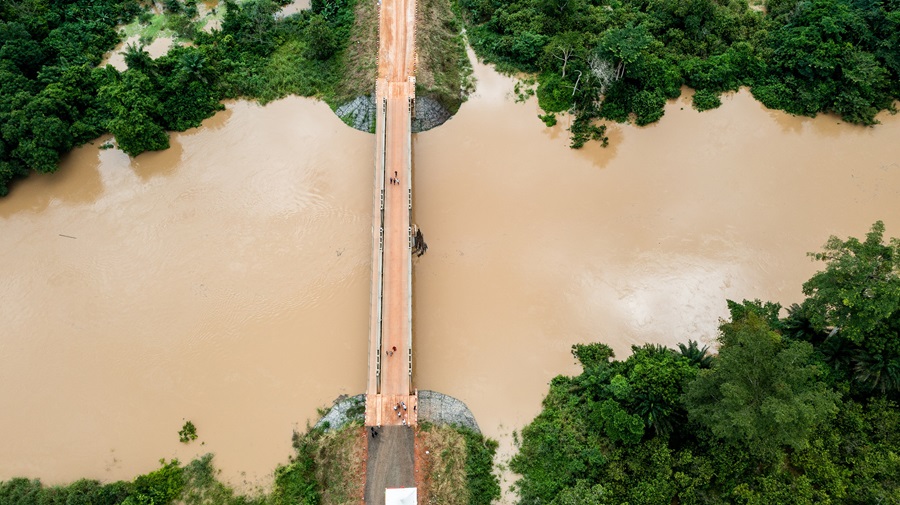

Asilevi explores structural governance failures driving illegal small-scale mining (galamsey) in Ghana, offering an interwoven set of policy solutions spanning cross-border supply chains, economics, and international diplomacy.
Ghana’s identity has been marked by its production of gold, right from its colonial designation as the Gold Coast to its status as Africa’s leading gold producer. Gold has been central to the country’s current political economy, such that in 2024 Ghana increased gold production by over 19 percent, producing approximately 4.8 million ounces. By 2025, gold revenues exceeded 960 million Ghanaian cedis.[1] Gold production has remained pivotal to Ghana’s development, especially in tackling unemployment by generating export earnings and tax revenue, and improving the socio-economic lives of many individuals and communities. [2]
Ghana’s gold mining sector includes small-scale informal artisanal mining and large-scale industrial mining. While small-scale informal artisanal mining is controlled by individual private actors, the large-scale industrial mining is controlled by foreign corporations and the Ghanaian government: “The process of small-scale gold production begins with mine proprietors and their employees. Gold then changes hands through middlemen, private and state-owned gold dealers before it is finally exported to the international market”.[3] The small-scale mining sector reportedly accounted for 35% of Ghana’s gold output while employing over 1 million Ghanaians in 2024.[4] To formalize gold trading in these two mining industries, the Ghanaian government established the Ghana Gold Board (GoldBod). The Board, established in April, 2025, oversees “the country’s gold trade, [and aims to] strengthen foreign exchange reserves, maximize national benefits from gold production, and ensure that the wealth generated from Ghana’s mineral resources contributes directly to the prosperity of its people”.[5] To ensure that more Gold is retained in Ghana, the Board introduced a system under the Ghana Accelerated National Reserve Accumulation Programme (GANRAP) where large-scale mining companies, starting July 1, 2026, are to sell 30% of their gold output to the Gold Board, while it requires all small-scale mining companies to be registered under the board to avoid penalties such as fines or closure.
Even though Ghana’s political economy relies on its gold production, beneath this lies a governance crisis with international implications: the persistence of illegal small-scale mining, locally known as “galamsey.” Often framed as an environmental and criminal issue by the media and government, “galamsey” is better understood as a failure of resource governance, one shaped by weak regulation, political interference, poverty, and insufficient international cooperation, particularly between Ghana and China.[6] Initially, “galamsey” referred to informal mining practices that involved handpicking gold grains from gold waste and later progressed to the use of basic tools such as shovels and spades. The term originated from the phrase “gather and sell gold grains”.[7] Today, it has evolved into a mechanized and highly destructive enterprise, as unlicensed miners now operate excavators, “Chang fan” machines, and bulldozers in forests and along riverbanks, bypassing Ghana’s Gold Board and environmental regulations. The effect of “galamsey” not only lies in the destruction of land and water bodies but, more importantly, poses a severe threat to the lives of citizens through mercury and lead poisoning. These toxins enter the food chain, increasing the risk of kidney disease, neurological damage, and congenital deformities.[8]
Even though the government of Ghana has tried all kinds of crackdowns, including arrests, equipment seizures, and the burning of “galamsey” equipment, the production process remains. The crackdowns seem to make the government look as though it is fighting “galamsey”, with the media amplifying these reports, when in fact the government fails to address why individuals are involved in “galamsey”. Locally, a major pull towards the sector is unemployment.[9] Both the young and the old are forced to work in illegal mining sites to make ends meet and provide for their families. Some children are also forced to abandon school and work on these mining sites, as they see school as a waste of time and view “galamsey” as their provider. [10]It is therefore time that the government of Ghana understands that enforcement of the law against “galamsey” cannot solve the problem when people have mouths to feed and bills to pay. Further, within these communities, “galamsey” has become a highly rational economic choice. Many individuals actively prefer informal extraction over alternative livelihoods like agriculture, which has been rendered unprofitable due to high input costs and volatile pricing. While a smallholder farmer might wait months for a meager, highly unstable seasonal payout, a few grams of gold powder provide immediate, daily cash in hand. Consequently, rural youth are not simply fleeing unemployment; they are actively rejecting the structural poverty associated with traditional farming, rendering standard state-sponsored agricultural programs economically uncompetitive.
On the international front, the involvement of foreign nationals, particularly the Chinese, in “galamsey” has further increased the damage to Ghanaian lands.[11] Chinese nationals, in collaboration with local chiefs and politicians who sell lands to the Chinese to enable them to engage in “galamsey”. These Chinese nationals bring in heavy mining machines, such as bulldozers and Chang fan machines, for illegal miners to dig deeper into illegal mining sites. These sites are found most of the time around major rivers, which serve as drinking water sources for community members, thereby polluting the water supply with degraded soil. Many Chinese have been arrested as the government seeks to repress their involvement in “galamsey”.[12] Again, arresting the Chinese involved in “galamsey” will not stop mining machinery from entering the country. These machines do not automatically appear; they are transported by sea, first passing through the country’s ports before reaching anyone. Their presence reflects weak government enforcement and a weak relationship between the Chinese and Ghanaian governments. Ending “galamsey”, therefore, does not solely rely on government crackdowns; it is an interwoven shift that requires policy reforms, international cooperation, and economic development. To end the extractive production process, I propose the following solutions:
- Supply Chain Interdiction and Asset Tracking
- Bilateral Judicial Cooperation (Ghana–China)
- The Government of Ghana Must Address Unemployment
- Cultivating Civic Environmentalism and Media Reframing
To secure the equipment supply chain against “galamsey” policy must bridge the gap between Ghana’s existing technical capabilities and port-of-entry enforcement. The Minerals Commission already operates a 24/7 Tracking Control Centre equipped with digital cadaster monitoring and geo-fencing capabilities to track heavy earth-moving equipment. However, illegal mining persists despite this infrastructure due to critical leakages at the point of entry and enforcement bottlenecks.[13]
To close these loopholes, the Ministry of Lands and Natural Resources must mandate direct inter-agency integration between the Ghana Revenue Authority (Customs Division) and the Minerals Commission at all major ports. Customs inspectors must physically verify, tag, and synchronize GPS tracking devices on imported excavators and heavy machinery before border clearance. Once equipment enters transit, real-time geofencing can remotely immobilize any machinery deviating into protected forest reserves or river bodies, triggering mandatory, automated military or law enforcement intervention.
While Ghana’s Minerals and Mining (Amendment) Act, 2019 (Act 995) provides for severe penalties including mandatory prison terms of 15 to 25 years for Ghanaian and foreign nationals, the practical application of these laws often falters due to diplomatic friction and judicial delays. The 'Aisha Huang' case demonstrated that while prosecution is possible, it is often undermined by inconsistent enforcement or political pressure. To move beyond these enforcement gaps, the government must prioritize a comprehensive Bilateral Judicial Framework with China. Instead of relying solely on deportation, which frequently allows offenders to escape justice, Ghana should establish joint intelligence protocols between the Ghana Immigration Service and Chinese authorities to target the transnational financiers of “galamsey”, rather than just low-level laborers. Crucially, this framework must include explicit mechanisms for the extradition of high-level kingpins to face trial in Ghanaian courts, alongside bilateral cooperation with financial institutions to freeze assets linked to illegal mining proceeds.
Additionally, Ghana should utilize the Forum on China–Africa Cooperation (FOCAC) as a diplomatic lever to hold Beijing accountable for the conduct of its nationals involved in galamsey, ensuring that individuals and corporations implicated in illegal extraction are permanently blacklisted from securing legitimate state contracts in both nations. Leveraging this framework requires navigating a deeply interdependent relationship. Bilateral trade between the two nations hit a record $14.1 billion in 2025, solidifying Beijing as Accra's largest trading partner. [14] While Ghana depends heavily on Chinese imports including heavy machinery used in “galamsey” Accra still holds real leverage. This leverage is not economic, but political and reputational. China needs Ghana as a stable partner in West Africa, relies on African diplomatic support at the United Nations (UN), and wants to protect its global image as a clean developer. Ghana can use this by showing Beijing that “galamsey” threatens Chinese-backed projects and ruins China's reputation, forcing both nations to tackle the issue together. Additionally, Ghana can explicitly frame the environmental devastation of illegal mining as a direct threat to the long-term viability of major Chinese state-backed investments like the Volta Economic Corridor.[15] Should firm regulatory enforcement lead to a withdrawal of Chinese state or private capital, Ghana can mitigate financing shortfalls by diversifying its development partners. Specifically, Accra can tap into green climate funds and leverage multilateral co-financing through institutions like the African Development Bank (AfDB). Furthermore, domestic investment vehicles like the Ghana Infrastructure Investment Fund (GIIF) can be deployed alongside public-private partnerships (PPPs) to crowd in private regional capital and keep major projects on track. Furthermore, with the Chinese Embassy publicly declaring its opposition to “galamsey” and launching the 2026 China-Africa Year of People-to-People Exchanges, Accra can treat the crisis as a mutual vulnerability. This allows Ghana to legitimately demand joint intelligence sharing, asset freezing, and kingpin extradition as reciprocal duties under their broader strategic partnership rather than a localized crime issue.
Because economic desperation is a primary catalyst for “galamsey”, law enforcement initiatives will consistently fail unless the state addresses the underlying crisis of youth unemployment. The solution lies not in banning artisanal mining, but in its aggressive formalization, the process of transitioning informal workers into legally registered, tax-paying, and environmentally compliant cooperatives. Global precedents demonstrate the viability of this approach; for instance, Mongolia’s Sustainable Artisanal Mining (SAM) project successfully transitioned thousands of informal 'ninja' miners into legally recognized, land-holding partnerships that actively conduct environmental rehabilitation. Similarly, cooperative formalization frameworks in Colombia and Mali have proven that providing legal supply-chain access and micro-credit incentives effectively eliminates mercury use and replaces chaotic, illicit extraction with tax-compliant, self-policing local economies. [16] By streamlining the bureaucratic licensing process for indigenous small-scale miners, the government can designate ecologically safe zones for extraction and enforce the use of eco-friendly, mercury-free technologies. Furthermore, to break the cycle of child labor and school truancy in mining communities, these formalization programs must be coupled with targeted social interventions. The state should implement Alternative Livelihood Programs (ALPs) such as sustainable agro-processing, local manufacturing, and technical vocational training. Admittedly, traditional ALPs in Ghana have historically failed because they push miners toward low-income agricultural alternatives that cannot compete with the immediate liquidity of gold. For ALPs to succeed where past initiatives have stumbled, they must move past basic hand-to-mouth skills. Instead, the state must deliberately design these programs around high-value commodity chains and localized industrialization capable of generating stable, competitive returns that protect family incomes without requiring them to sacrifice their children's education for immediate survival.[17]
Eradicating “galamsey” requires a fundamental shift in civic consciousness, moving from treating environmental degradation as a localized issue to recognizing it as a collective existential threat. Civil society organizations, traditional leaders, and local communities must foster a culture of active environmental stewardship. Because local communities are the first to experience the catastrophic effects of toxic water pollution and soil degradation, they must be empowered to act as local watchdogs, reporting illegal operations without fear of political retaliation.
However, this shift in civic consciousness must not mistakenly place the primary onus of environmental stewardship on local communities, thereby absolving the Ghanaian state or the international markets that absorb illegal gold. Indigenous African societies possess deeply rooted, ecologically harmonious logics; however, when the state fails to protect local economies, rural populations are forced into antagonistic relationships with their own environments out of sheer economic survival. Empowering local communities to act as watchdogs is not about forcing them to self-correct, but about granting them the institutional protection and sovereign agency to defend their ancestral lands from external, predatory extraction. Concurrently, the media must radically alter its reporting paradigms. Rather than merely broadcasting sensationalist, short-lived reports of military crackdowns and burning machinery, journalists must engage in sustained, investigative journalism. The media should shift public attention toward exposing the high-level financiers of these operations, tracking the long-term public health crises such as heavy metal poisoning in the food chain, and reframing environmental protection as a shared national duty.
“Galamsey” is often portrayed as a localized problem driven by individual greed or foreign exploitation. In reality, it is a governance test situated at the intersection of resource policy, international diplomacy, and development. Gold has shaped Ghana’s past and continues to influence its present. Whether it secures the country’s future depends on policy choices made now, choices that demand political will, international accountability, and sustained institutional reform.
Phylix Akorfa Asilevi is a PhD student at the University of Wisconsin–Madison's School of Journalism and Mass Communication, researching journalism ethics, African studies, and Gender Studies.
Endnotes
[1] Reuters. “Ghana Gold Output Could Rise 6.25% to 5.1 Million Ounces in 2025 | Reuters.” Reuters, May 30, 2025. https://www.reuters.com/world/africa/ghana-gold-output-could-rise-625-51-million-ounces-2025-2025-05-30/.
[2] Amankwah, R.K., and C. Anim-Sackey. “Strategies for Sustainable Development of the Small-Scale Gold and Diamond Mining Industry of Ghana.” Resources Policy 29, no. 3–4 (September 2003): 131–38. https://doi.org/10.1016/j.resourpol.2004.07.002.
[3] Teschner, Benjamin A. “Small-Scale Mining in Ghana: The Government and the Galamsey.” Resources Policy 37, no. 3 (September 2012): 308–14. https://doi.org/10.1016/j.resourpol.2012.02.001.
[4] “Ghana’s Artisanal Mining Earns $5bn in 2024 - Africa Briefing.” Africa Briefing, 2025. http://africabriefing.com/ghanas-artisanal-mining-earns-5bn-in-2024/?scfm-mobile=1.
[5] “Constitution Day: Goldbod and Ghana’s Constitutional Quest for Resource Sovereignty - Ghana Gold Board.” Ghana Gold Board, January 7, 2026. https://goldbod.gov.gh/constitution-day-goldbod-and-ghanas-constitutional-quest-for-resource-sovereignty/.
[6] Opportunity Two Excel. “The Impact of Galamsey on Water Bodies in Ghana.” Opportunity Two Excel Foundation-OTEF, October 17, 2024.
https://opportunitytoexcel.com/the-impact-of-galamsey-on-water-bodies-in-ghana/.
[7] Akakpo, Lawrence. “Historical Background or Genesis of Galamsey in Ghana.” Modern Ghana News, September 14, 2021. https://www.modernghana.com/news/1104248/historical-background-or-genesis-of-galamsey-in.html.
[8] Amewomom, Jonathan, Osei Akoto, Lyndon Sackey, Francis Opoku, David Azanu, Fobi E. Osei, and Benyade K. Benjamin. “A Review of Health Hazards Associated with Exposure to Galamsey-Related Pollutants.” Health Sciences Investigations Journal, no. Volume 5 Issue 2 (June 20, 2024). https://doi.org/10.46829/hsijournal.2024.6.5.2.726-734.
[9] Hawkson, Emmanuel. “Youth Unemployment Will Hamper Galamsey Fight - Sam Jonah.” Graphic Online, September 26, 2025. https://www.graphic.com.gh/news/general-news/ghana-news-youth-unemployment-will-hamper-galamsey-fight-sam-jonah.html.
[10] Azumah, Francess Dufie, Enock Baah, and John Onzaberigu Nachinaab. “Causes and Effects of Illegal Gold Mining (Galamsey) Activities on School Dropout and Residents at the Tutuka Central Circuit in Obuasi Municipality in Ashanti Region, Ghana.” Journal of Education 201, no. 3 (April 28, 2020): 162–73. https://doi.org/10.1177/0022057420905109.
[11] Baaladong, Francis. “Galamsey and the Chinese Invasion: A Crisis Enabled from Within.” Modern Ghana, July 3, 2025. https://www.modernghana.com/news/1413789/galamsey-and-the-chinese-invasion-a-crisis-enabl.html.
[12]GhanaWeb. “Naimos Arrests Chinese Galamseyer, Hands Suspect over to Immigration Service.” GhanaWeb, November 7, 2025. https://www.ghanaweb.com/GhanaHomePage/NewsArchive/NAIMOS-arrests-Chinese-galamseyer-hands-suspect-over-to-immigration-service-2008518.
[13] See https://www.mincom.gov.gh/sierra-leone-delegation-embarks-on-study-tour-of-minerals-commission/
[14]Adeyemi, Segun. “China–Ghana Trade Hits $14.1 Billion as Beijing Deepens Economic Push in West Africa | Business Insider Africa.” Business Insider Africa, March 11, 2026. https://africa.businessinsider.com/markets/chinaghana-trade-hits-dollar141-billion-as-beijing-deepens-economic-push-in-west/y17f5s6.
[15]The Volta Economic Corridor (VEC) is a major industrial and agricultural initiative aimed at developing the Volta River Basin into a production and logistics hub connecting Tema, Akosombo, and northern Ghana. Developed in collaboration with international partners (including China’s Hunan Architectural Design Institute Group) and supported by multilateral feasibility funding, the project relies on clean water, river navigation, and fertile land.
[16] Spiegel, Sam. “Analysis of Formalization Approaches in the Artisanal and Small-Scale Gold Mining Sector Based on Experiences in Ecuador, Mongolia, Peru, Tanzania and Uganda: Tanzania Case Study - University of Edinburgh Research Explorer.” The University of Edinburgh, 2012. https://www.research.ed.ac.uk/en/publications/analysis-of-formalization-approaches-in-the-artisanal-and-small-s/.
[17] Hilson, Gavin, and Sadia Mohammed Banchirigah. “Are Alternative Livelihood Projects Alleviating Poverty in Mining Communities? Experiences from Ghana.” The Journal of Development Studies 45, no. 2 (January 14, 2009): 172–96. https://doi.org/10.1080/00220380802553057.