



The Passport of Pain: Borders Inside the Body
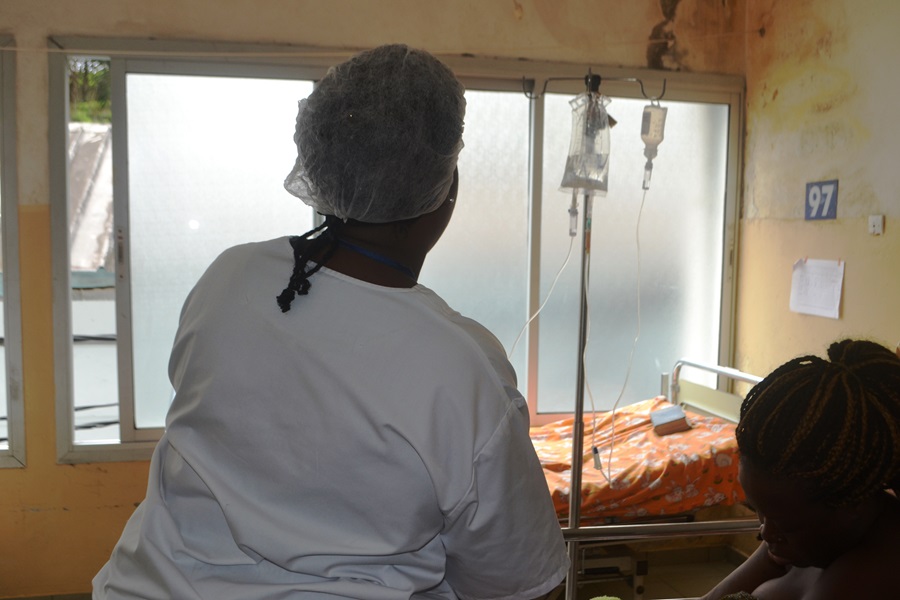

The essay explores medical migration across Africa, examining how unequal access to healthcare shapes mobility, citizenship, and belonging, while considering the body as a site where political and economic borders become materially inscribed. Through the stories of Kamau and Dr. David, we come to understand the mid-level health workers who form the actual spine of clinical care in Kenya and the masses of Kenyans that eventually make it to their clinics.
Migration is often imagined through the language of movement. Every day, thousands of Africans undertake journeys in search of treatment, medicine, diagnosis, surgery, rehabilitation, or palliative care. They travel carrying pathology reports, referral letters, laboratory results, scans, prescriptions, and the hope that somewhere beyond their immediate geography lies the possibility of survival. Kamau's illness began before March, before he sat in the small consulting room where a radiologist finally said the word carcinoma out loud. It began almost a year earlier, in the unremarkable persistence of a headache that refused to behave like an ordinary headache, quietly, disguised as something manageable, something a chemist could resolve, something that did not yet deserve the word hospital.
He went first to a dispensary near his house, the kind with a single room divided by a curtain, where a nurse took his temperature and asked if he had slept well. He was given paracetamol. When the headaches did not relent, he tried a clinic in the next estate, where a clinical officer asked about stress, about screen time, and about whether he had been drinking enough water. He was given something stronger this time, a combination of ibuprofen and something for the sinuses, because congestion was mentioned, because someone thought perhaps it was allergies settling behind the eyes. Weeks passed. He went to another dispensary, then another clinic, carrying the same complaint like a stone in his pocket, and each time he left with a different explanation and the same instruction: come back if it does not improve.
It did not improve, simply it learned to wait alongside him, present in the mornings, present after meals, present in a way that eventually it stopped announcing itself as pain and became instead a kind of atmosphere he moved through. He would spend over 3000KES for painkillers alone, now a young man he had to resign at his workplace because the hospital visits became too much.
This is the part of medical migration that rarely gets written down, not the eventual referral letter, not the eventual hospital, but the long exhausting prelude of being misread. Before a patient becomes a case, they must first survive being ordinary. They must be given paracetamol enough times, reassured enough times, sent home enough times, before someone finally asks the question that should have been asked from the beginning. This is not always negligence. Sometimes it is simply the architecture of a health system that trains its lowest-cost workers to manage the most common explanations first, and only escalate when the common explanations refuse to hold. It was in this way, nearly a year into his headaches, that Kamau finally sat across from Dr. David, after heading north west from Enkare Nyrobi.
These travellers almost never appear in discussions about migration, however their movement is rarely captured by the categories that dominate public discourse. They are not typically described as refugees, expatriates, asylum seekers, or labour migrants. Although their journeys reveal some of the deepest inequalities shaping contemporary Africa. They expose how access to healthcare remains unevenly distributed across the continent and how survival itself has become geographically determined. The routes they travel map a political reality in which the right to care is often dependent on where one is born, what passport one carries, and whether one can afford to move. To speak about migration in Africa is therefore also to speak about illness. The movement of people seeking healthcare is not a marginal phenomenon but one of the continent's most revealing forms of mobility. It illuminates the relationship between state capacity, economic inequality, colonial legacies, regional integration, and the lived experience of citizenship. More importantly, it forces us to reconsider where borders actually reside. While migration policy tends to locate borders at checkpoints and frontiers, the experience of illness suggests something different. For many Africans, the most consequential borders are not encountered at the edge of nations. They are encountered inside the body.
The geography of healthcare in Africa mirrors the geography of power. Across the continent, specialist services, advanced diagnostics, cancer treatment centres, dialysis units, rehabilitation facilities, and palliative care programmes are concentrated within a limited number of urban centres and relatively wealthier regions. This concentration is not accidental. It reflects decades of uneven development, structural adjustment programmes that weakened public health systems, debt burdens that constrained social investment, and global economic arrangements that continue to shape national priorities. The result is a landscape in which healthcare infrastructure is distributed with extraordinary inequality.
Dr. David was not, strictly speaking, a doctor in the way the title suggests to people outside the profession. He was a Clinical Officer, one of the many mid-level health workers who form the actual spine of clinical care in Kenya, trained through a three-year diploma at a medical training college rather than the five-and-a-half-year MBChB that produces a Medical Officer. In public imagination, the word doctor is reserved for the latter. In practice, it is Clinical Officers who see the overwhelming majority of patients in this country, who staff rural health centres single-handedly, who run outpatient departments in referral hospitals, who often possess more accumulated clinical instinct than their titles are credited for, simply because they have seen more patients, more repetitions of the same disease dressed in different bodies, than almost anyone else in the system.
Dr. David had spent years working within the oncology department at Kenyatta National Hospital before moving to private practice, and this history mattered more than his title. He had seen enough tumours disguise themselves as sinus problems, enough headaches that were not headaches at all, to recognise the shape of something when it appeared in front of him even before the shape had a name.
He examined Kamau slowly. He asked questions the previous clinicians had not thought to ask, whether the headache was accompanied by any change in hearing, whether there was any blockage in the nose, whether there had been any blood, however small, however easy to dismiss as nothing. Then he wrote two things on different sheets of paper: a request for a CT scan of the head and neck, and a referral letter addressed to Kenyatta National Hospital.
I did not see him write it. I saw it afterward, the way families often encounter the truth of an illness–secondhand, through paper, through a letterhead and a name that meant something to me only because of where I had once worked. I had done locums at Dr. David's facility. I knew his handwriting, I knew the particular economy of his notes, and I knew, with the specific dread of someone trained to read between clinical lines, that a referral for a CT scan of the head and neck to KNH's ENT department was not written casually. Referral letters in this country are rarely generous with detail. They are brief, almost withholding, as though written by people who understand that too many words on a page can frighten a family before a diagnosis has even been confirmed. But the destination of a referral often says more than its content. KNH's ENT department does not receive headache patients. It receives patients whose headaches have stopped being ordinary.
I called him, now not as Kamau's sister immediately, but first as someone who had shared a corridor with him, who had reviewed patients under the same roof.
"Is it what I think it is?" I asked.
He hesitated in the particular way clinicians hesitate when they are trying to protect a family from a truth they already suspect. The pause before language, the small silence in which a person decides how much honesty a voice on the other end of the phone can hold. He offered me something gentler than the truth, something meant to soften the days between the CT scan and its result.
I did not let him. "Be candid with me," I said. "Talk to me as your equal, I need to know so I can start preparing my family."
There is a particular loneliness in asking for the truth in a language your profession has trained you to expect, knowing that the person delivering it will have to decide, in real time and whether to speak to you as a colleague or protect you as a sister. Dr. David chose honesty, carefully worded but unmistakable. And so, before a single scan had been taken, before a biopsy had confirmed anything, before Kamau himself fully understood what was being investigated, I had the strange, isolating privilege of grief that begins before permission has been granted to grieve.
For many displaced people, movement does not end upon reaching safety. It continues through a succession of clinics, humanitarian programmes, referral networks, and medical facilities. Migration becomes an ongoing search for care.
Yet the phenomenon extends far beyond humanitarian crises. Across the continent, middle-class and affluent families increasingly travel abroad for treatment. Destinations such as India, Türkiye, South Africa, Egypt, and the Gulf states have become familiar nodes within African healthcare journeys. Governments themselves contribute to this pattern, frequently allocating substantial public resources to sponsor overseas treatment for political leaders, civil servants, and citizens with specialised medical needs. While these arrangements may provide immediate solutions for individual patients, they also reveal a troubling reality. The routine export of patients often reflects the inability or unwillingness of states to build robust healthcare systems at home.
The consequences are not merely financial. Medical migration generates new forms of inequality. Those who possess resources can travel. Those who do not must remain. Survival becomes linked to mobility, and mobility becomes linked to wealth. A border emerges between those capable of crossing it and those who cannot. The injustice lies not only in unequal access to treatment but in the fact that treatment itself has become a function of movement.
The body bears the imprint of these arrangements and migration studies has long examined the violence of borders, documenting deaths at sea, abuses in detention centres, exploitative labour systems, and the criminalisation of movement. These analyses remain essential. Another dimension that deserves equal attention is the way political and economic structures become embodied. Illness is not simply a biological event. It is shaped by the conditions within which people live, work, travel, and seek care. The body absorbs the consequences of policy decisions. It records the effects of underfunded hospitals, inaccessible medicines, inadequate social protection, and unequal healthcare infrastructure.
In this sense, the body functions as an archive. Scars, amputations, untreated conditions, chronic pain, and preventable deaths tell stories about governance as surely as official documents do. A delayed diagnosis may reveal the absence of diagnostic equipment. A disability acquired through untreated illness may expose failures in healthcare access. A patient forced to undertake repeated cross-border journeys for treatment embodies a history of regional inequality. The body remembers what institutions often prefer to forget.
This perspective complicates dominant narratives about African mobility. Contemporary discussions of migration frequently oscillate between two extremes. On one side are security-oriented approaches that frame migrants as threats to be managed, contained, or excluded. On the other are celebratory narratives that emphasise resilience, entrepreneurship, and the economic contributions of migrants. While both perspectives capture elements of reality, neither fully addresses the structural conditions that produce movement in the first place.
The migration of patients reveals a deeper contradiction. Across Africa, governments and regional institutions increasingly speak the language of integration. Continental frameworks promote trade, investment, and cooperation. Pan-Africanism continues to inspire visions of shared destiny and collective progress. Yet the lived experience of many Africans remains defined by unequal access to fundamental services. Goods often move more freely than people. Capital crosses borders with relative ease. Medicines, technologies, and expertise circulate through global markets. Meanwhile, individuals confronting illness encounter visa restrictions, bureaucratic obstacles, financial barriers, and healthcare systems that remain largely organised along national lines.
This contradiction becomes especially striking when viewed through the lens of Global Africa. The descendants of historical displacement, slavery, colonialism, and labour migration continue to maintain complex relationships with the continent. Efforts to build connections across the African world frequently invoke ideas of belonging, solidarity, and shared identity. These aspirations carry profound political and cultural significance. Yet they also raise practical questions about what solidarity requires. If Pan-Africanism is to be more than a symbolic project, it must confront the inequalities that make healthcare migration necessary in the first place.
The challenge is not merely to facilitate movement but to address the conditions that compel movement. A continent committed to free movement must also ask why so many people are forced to travel for basic healthcare. It must ask why access to treatment remains so unevenly distributed. It must ask why citizenship so often fails to guarantee care. These questions cannot be separated from broader debates about development, public investment, debt, governance, and global economic relations. Healthcare migration is not simply a medical issue. It is a political issue, an economic issue, and ultimately a question of justice.
The stories of those who travel in search of treatment rarely generate the visibility afforded to dramatic border crossings or migration crises. Their journeys unfold quietly in bus stations, airport terminals, hospital corridors, waiting rooms, and family fundraising campaigns. Yet they reveal something fundamental about contemporary Africa. They show how inequality structures the possibility of survival. They demonstrate that movement is often less a choice than a response to institutional failure. And they remind us that borders operate not only at the edges of states but within the everyday realities of health and illness.
To understand migration solely as the movement of people across territory is therefore insufficient. Migration is also the movement produced by unequal access to life itself. The patient who travels for surgery, the family that relocates for dialysis, the refugee searching for specialised care, and the worker postponing treatment because documentation remains uncertain all inhabit a shared political landscape. Their experiences reveal a continent where healthcare remains unevenly mapped and where survival frequently depends upon mobility. The passport of pain is not issued by any government. It carries no photograph, nationality, or official stamp. Yet it remains one of the most widely held travel documents in Africa. It authorises journeys that no one wishes to undertake. It compels movement across cities, regions, and borders. It records the unequal distribution of care and the unfinished project of African solidarity. Most importantly, it reminds us that the struggle for freedom of movement cannot be separated from the struggle for the conditions that make movement unnecessary. For as long as survival remains geographically determined, illness will continue to produce its own migrants, and the most enduring borders will remain those inscribed within the body itself.
Frashia (Sonnie) Karanja writes at the meeting point of nursing and storytelling. Drawing on years spent bearing witness to the body in crisis, she turns her attention in fiction and essay to what often goes unsaid, the grief, tenderness, survival, and the weight of memory in ordinary families. She co-founded Narrative Medicine Africa to give these stories room to become something communal: care, advocacy, healing. Her work has found homes in Rafinki, Lend Me a Whisper, Kalahari Publishers, and Brittle Paper, with forthcoming pieces in Doek! Magazine, & CASIN and Afro Femme. She has participated in workshops including the Qwani Memoir and Biography Workshop with Dr. Joyce Nyairo, a self-editing masterclass with Ellah Wakatama, and the Creatives Ghana Project with Boakye D. Alpha.
Suggested Readings
El-Shaarawi, N. & Larchanché, S. (eds.). Migration and Health: Challenging the Borders of Belonging, Care, and Policy. Berghahn Books, Rethinking Biosocial Anthropology series. 2022.
Livingston, J. Improvising Medicine: An African Oncology Ward in an Emerging Cancer Epidemic. Duke University Press, 2012.
Asakitikpi, A. "Excluded Lives: Migrant Status and Access to Healthcare in South Africa." International Journal of Environmental Research and Public Health, 2026. https://doi.org/10.3390/ijerph23060775
Hester, R. “Statement # 2 1 The Body as Border,” Academia, 2006. https://www.academia.edu/65567273/Statement_2_1_The_Body_as_Border
Haimanot, E., Kartik, M. & Miah, H. "Migration of African healthcare professionals: the need for equitable healthcare worker migration." Pan African Medical Journal, 2025. https://www.ncbi.nlm.nih.gov/pmc/articles/PMC12318875/
Lokotola, C.L., Mash, R., Sethlare, V., Shabani, J., Temitope, I. & Baldwin-Ragaven, L. "Migration and primary healthcare in sub-Saharan Africa: A scoping review." African Journal of Primary Health Care & Family Medicine, 16(1), 2024. https://pmc.ncbi.nlm.nih.gov/articles/PMC11304195/
Mwaniki, D.L. & Dulo, C.O. Migration of Health Workers in Kenya: The Impact on Health Service Delivery. EQUINET Discussion Paper 55, 2008. https://equinetafrica.org/sites/default/files/uploads/documents/Diss55KenyaHRMig.pdf
World Health Organization. World Report on Promoting the Health of Refugees and Migrants: Monitoring Progress on the WHO Global Action Plan — Executive Summary. WHO, 2026. https://www.who.int/publications/i/item/B09672
World Health Organization. Global Research Agenda on Health, Migration and Displacement: Strengthening Research and Translating Research Priorities into Policy and Practice. WHO, 2023. https://www.who.int/publications/i/item/9789240082397
Editorial "Migration and Global Africa: People, Borders, Football and Precarity." Pambazuka News, Issue 925:: Special Issue on Migration, 25 June, 2026. https://www.pambazuka.org/Migration-and-Global-Africa
Sepaela, M. "Borders, Labour and the African Migrant: Reclaiming Human Mobility in a Violently Unequal World." Pambazuka News, Issue 925: Special Issue on Migration, 25 June, 2026. http://www.pambazuka.org/index.php/African-Migrant