



Integration Without Representation: Executive Power and the Democratic Deficit in the East African Community
How executive power in the EAC limits democracy and curtails meaningful regional participation.
In the early 1990s, political philosopher Tom Franck1 observed that a government’s legitimacy was increasingly measured against democratic standards, a principle that was then slowly gaining recognition as customary international law. Central to this emerging right was political participation, where every individual is entitled to take part directly in governance. As states pool sovereignty and decision-making beyond national borders, this demand for legitimacy cannot be overruled in regional integration, where neighboring countries join to achieve common goals. The East African Community (EAC) Treaty envisioned such integration, which, at its core, was not only about economic coordination but also about creating a common integrated community; envisioned to harmonize laws, policies and institutions across Partner States, to foster free movement, shared governance frameworks and collective accountability among member nations. This was to be followed by a shared political space where citizens could influence the rules and institutions that govern them.
Yet, in practice, the EAC has elevated executive consensus over citizen participation, leaving this foundational democratic principle largely unfulfilled.
The EAC’s Authority
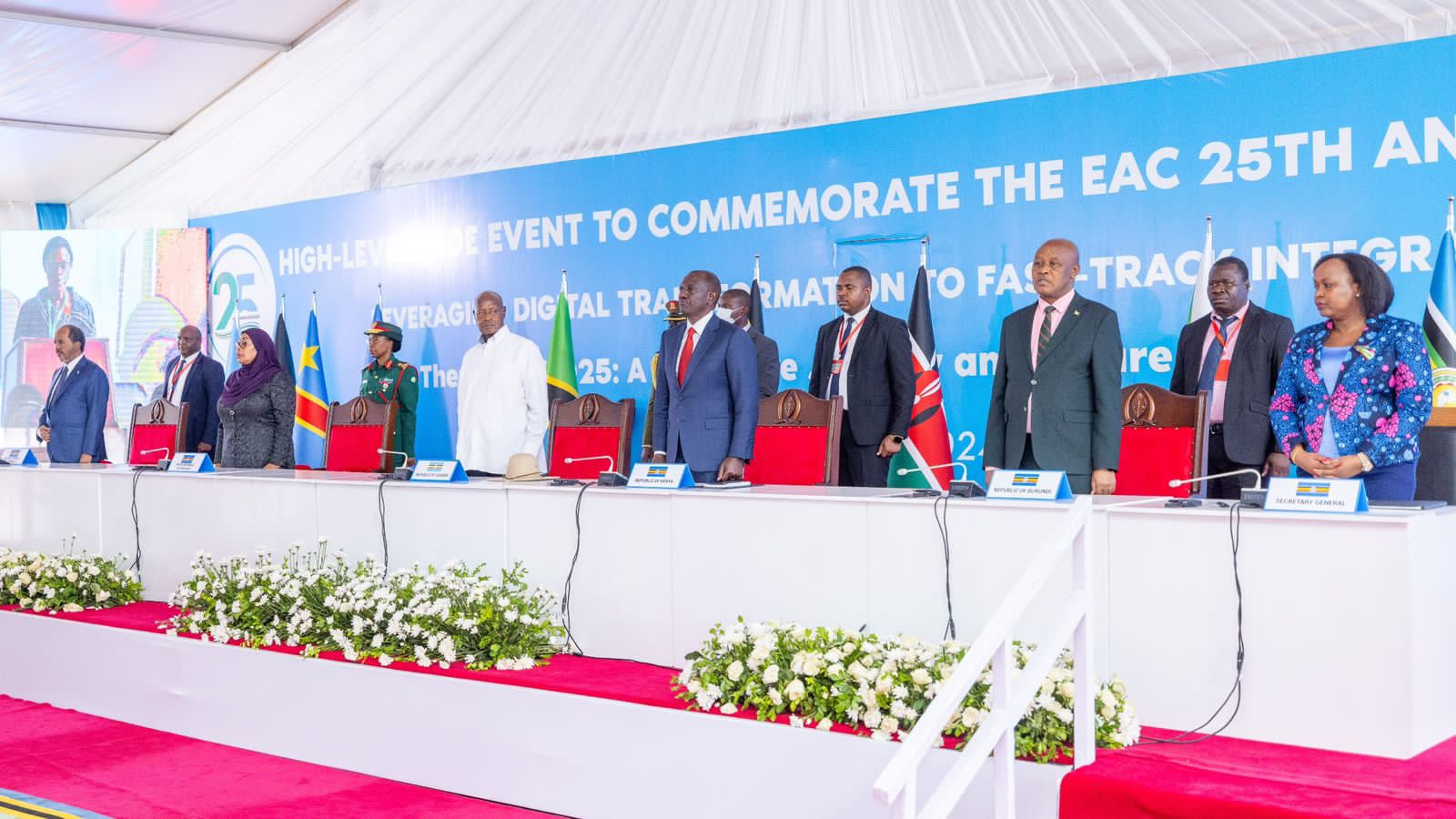
At the apex of the EAC stands the East African Summit, a gathering of Heads of State that operates as the Community’s supreme authority. Power is firmly centralized at this level, often in the hands of leaders who have ascended to office through processes that are, at best, contested and, at worst, deeply questionable. In such circumstances, it is difficult to claim that executive consensus reflects the collective will of the East African people. Authority thus rests with actors whose popular legitimacy has almost always been uncertain, widening the gap between the institutional design of integration and the democratic aspirations of the citizens it purports to serve.
The Summit determines policy direction, appoints key officials, drives the integration agenda, and exercises judicial influence by appointing the EAC judges (Article 24) and removing them (Article 26) from the East African Court of Justice. 2
The Summit is also legally insulated under Article 16, which places it above the very regulations, directives, and decisions of the Council that are binding on all other organs and Partner States, a clear illustration of power immune to accountability.
The Council of Ministers and the East African Legislative Assembly (EALA)
The concentration of power at the Summit naturally extends downward, shaping the Council of Ministers into an instrument of executive will rather than a deliberative body. The Council consists of Ministers responsible for East African Affairs in their respective Partner States, such other Ministers as each state may determine, and the Attorney General of each Partner State3. Through this structure, it goes without saying that every member of the Council is firmly rooted in the executive arm of their national governments, with their positions and appointments tethered to the “kings,” thereby rendering their allegiance continually upward, rather than outward to the subjects.
The Council’s principal function is to initiate and submit Bills to the East African Legislative Assembly (EALA). This means that the legislative agenda of the Community is shaped long before it reaches parliamentary debate; with history offering no meaningful example of either the Council or the Assembly acting in opposition to it. Authority therefore moves smoothly from Heads of State, through the Council, into the Assembly; efficient and unquestioned, a form of delegated obedience.
The EALA, though styled as a regional parliament, does little to disrupt this arrangement. Its members are not directly elected by the people of East Africa; instead, they are nominated by presidents most of the time, political parties and vetted by national parliaments, which often emerge from deeply contested electoral environments themselves. Representation is thus twice removed from the citizen. EALA may debate, amend and pass laws, but it does so within boundaries already drawn elsewhere. Legality may be achieved, but again, legitimacy remains thin.
Judicial scrutiny has exposed some of these democratic shortcomings. In the famous Anyang’ Ny’ong’o case, the Court defined the process of appointing EALA members in Kenya as “fatally flawed in substance, law and procedure and contravening the EAC Treaty”4. Kenya’s democratic deficit in EALA has been mirrored with appointments frequently reflecting political patronage rather than merit. Lists of nominees have often been dominated by individuals from prominent political families or close allies of major parties, sparking public criticism that selections prioritize loyalty over competence.5 The controversy surrounding such practices did not remain isolated; it informed subsequent litigation in other partner states, including the Republics of Uganda and Tanzania 6. These cases, instituted in the wake of the earlier decision, similarly resulted in reforms to domestic legal frameworks governing the election of EALA members within the respective Partner States.7 A group of Somali legislators filed a case with the East African Court of Justice (EACJ) seeking to nullify the list of nine EALA nominees submitted by the Federal Parliament of Somalia,8 alleging that the process was “stage-managed” and marred by nepotism, bribery, and a lack of transparency and inclusivity.9
The challenge of representation extends beyond the EAC, affecting many African regional integration bodies, where presidents and ministers dominate governance and citizens have minimal influence. All decisions on laws, policies, and cooperation are made at the top, by governments, rather than through direct public participation or elected regional representatives. ECOWAS, SADC, IGAD, COMESA, and even the African Union (AU) are controlled by meetings of Heads of State and ministers. While they do have parliamentary bodies, these institutions are usually weak and lack real law-making power. The Pan-African Parliament (PAP) is a good example, whose members are not elected directly by African citizens; instead, they are chosen by national parliaments, many of which already struggle with legitimacy10. As a result, PAP cannot pass binding laws and has repeatedly called for a greater role in shaping AU decisions.11
A Democratic Illusion
To describe the EAC as a democratic illusion is not to deny its promise. It has, indeed, come a very long way, especially considering that during its first implementation, in 1967, its founding Partner States were still young from the shackles of colonialism. And that progress, does deserve commendation. Yet, as an African saying goes, he who looks back never moves forward. Six decades later, the scales of colonialism ought to have long faded, yet little of substance has changed. Unlike the EU, which evolved with genuine citizen involvement12, the tragedy of the Treaty lies in its failure to live up to its own vision. Buried within its Articles is a radically people-centered conception of East Africa, one that, if taken seriously, could have rewritten (or still write) the region’s political destiny. Perhaps this is why the Summit clings so tightly to its authority.
The unsurprising addition of a mechanism to postpone a human rights framework has been another concerning issue. With power concentrated in the Summit, the debatable legitimacy of many Heads of State, and the predictable choreography of executive control over appointments and legislation, it is painfully clear that the current structure cannot hope to reflect the will of people striving for a common purpose amid turmoil. The East African Court of Justice’s historically timid approach to human rights is but a mirror of this executive-dominated architecture13. Perhaps this explains why member states continue to suffer at their own hands, while the Summit stands tall like a monument to political disintegration. This is evident in Tanzania’s 2025 “democratic” elections, Uganda’s vaunted “rule of law” (where opposition leader Kizza Besigye currently remains in detention), 14 the Rwanda-DRC constant political disorder, and the simmering tensions between Ethiopia and Eritrea15.
Article 27(2) of the Treaty allows the deferment of the establishment of a human rights jurisdiction by the EACJ to a “suitable subsequent date,” probably ensuring that the architecture of power remains firmly under executive control and that the realization of democratic aspirations is perpetually delayed.16
The executive stranglehold over the EAC is further entrenched by control over the Treaty itself. Amendments to the EAC Treaty are driven primarily by the Summit, with no requirement for direct public participation, regional referenda, or citizen-initiated reform. The people of East Africa live under a constitutional framework they cannot amend or meaningfully influence. This monopoly over the foundational legal text allows the Summit not only to govern within the rules but also to rewrite them when convenient. It’s this absence of popular involvement in Treaty reform that exposes the EAC as a legal order designed to serve executive coordination rather than democratic self-determination.
Constant electoral misconduct, unlawful kidnappings and detentions, repression of dissent and executive overreach also keeps the community in perfect chains. The EACJ, dependent on executive-controlled funding and political goodwill for enforcement, may view a strong human rights jurisdiction as more disruptive than the current institutional arrangement is prepared to tolerate. For how can a court meaningfully rule against those whose power resides in the very hands that anoint its judges?
Reclaiming the Vision of the EAC
Borrowing from Bikundo’s thoughts on Giorgio Agamben’s concept of political arcana 17, the EAC Summit sits comfortably at the center of power, yet legal and institutional arrangements obscure the true concentration of authority. While the Summit openly governs, the Treaty makes its dominance appear neutral and procedural, masking the fact that citizens have little meaningful influence over integration. Law functions less as a forum for public participation and more as a formal shield that protects executive control. As Bikundo observes, law in these contexts can become a “legal fiction that must be treated as true”, even in the face of all contrary evidence, to remain “coherent”.18 In the EAC, this legal fiction helps sustain the appearance of a collective, rule-bound process, even as real authority remains firmly concentrated in the hands of Heads of State. Citizens, in turn, are reduced to passive participants in a project carried out in their name, giving rise to a conditional democracy where formal structures exist, but meaningful participation and accountability remain largely absent.
To restore the original vision of East Africa, reforms must focus on making the legislature accountable, the executive answerable, the judiciary independent, and human rights enforceable. First, members of the East African Legislative Assembly (EALA) should be directly elected by citizens in all Partner States, ending the current system of political patronage and ensuring the Assembly truly represents the people. Here, the EU offers guidance since 1979.19
Second, executive accountability must be strengthened by removing the Summit’s legal protection under Article 16 of the EAC Treaty. This should be repealed or revised so that decisions made by the Council are binding on the Summit, ensuring Heads of State are bound by law and cannot act above it.
Third, judicial independence is critical. Judges of the EACJ should be appointed and removed through a mechanism independent of the Summit, such as a regional judicial service commission involving EALA, national judiciaries, and professional legal bodies. This would help ensure that “justice may seem to be done” and allow the Court to adjudicate disputes involving executive power without bias or undue influence.
Finally, the EACJ’s human rights jurisdiction under Article 27(2) must be immediately operationalized. Any further delay reinforces executive dominance and risks undermining the rule of law across the Community.
Taken together, these reforms would transform the EAC from an executive-driven arrangement into a constitutional community grounded in popular sovereignty, legal accountability and most importantly, democratic participation. Without such reforms, East African integration will continue to be imposed as a fait accompli, replicating at the regional level the same democratic deficits that plague the member states.
Carolyn W. Gatonye is an independent legal researcher and a student of the law at Kabarak University, Kenya. Her work interrogates the intersections of law and governance, with a particular interest in regional integration, protest cultures and human rights.
Endnotes
1. Tom Franck, ‘The Emerging Right to Democratic Governance (1992)’ American Journal of International Law
2. Treaty for the Establishment of the East African Community
3. Treaty for the Establishment of the East African Community, Article 14
4. Prof. Peter Anyang’ Nyong’o and Others Vs Attorney General of Kenya and Others, REF No 1. of 2006 & APPEAL NO. 1 OF 2009
5. Yvone Okwara, Standard Media, <https://www.standardmedia.co.ke/commentary/article/2001240203/hypocrisy-in-debate-over-eala-nominations> May 18, 2017
6. Democratic Party and Mukasa Mbidde v The Secretary-General of the East African Community and the Attorney-General of the Republic of Uganda EACJ Reference 6 of 2011, First Instance Division; and Mtikila v Attorney-General of Tanzania & Others EACJ Reference 1 of 2007
7. Victor Lando, The domestic impact of the decisions of the East African Court of Justice, AHRLJ Volume 18 No 2 2018 https://www.ahrlj.up.ac.za/lando-v#pgfId-1153624
8.Luke Anami, The East African News, ‘EACJ stops Somalia EALA picks over alleged irregularities’, <https://www.theeastafrican.co.ke/tea/news/east-africa/eacj-stops-somalia-eala-picks-over-alleged-irregularities-5275666#:~:text=Somalia%20has%20been%20barred%20from%20nominating%20nine,process%2C%E2%80%9D%20the%20EACJ%20First%20Instance%20Division%20ruled> Nov 24, 2025
9. Somali Guardian, ‘East African Court blocks seating of Somalia's EALA delegates amid corruption claims’ <https://www.somaliguardian.com/news/somalia-news/east-african-court-blocks-seating-of-somalias-eala-delegates-amid-corruption-claims/> Nov 22, 2025
10. Article 5, Protocol to the Treaty Establishing the African Economic Community Relating to the Pan-African Parliament
11. KBC Agencies, ‘PAP MPs demand involvement in election of next AUC Chair’ September 15 2024 <https://www.kbc.co.ke/pap-mps-demand-involvement-in-election-of-next-auc-chair/>
12. Federal Ministry of the Interior, ‘Elections to the European Parliament’ ‘https://www.bmi.bund.de/EN/topics/constitution/electoral-law/european-e…;
13. Carolyn W. Gatonye, AfricLaw, ‘Courting Dignity: The East African Court of Justice and the Jurisprudence of Silence’ <https://africlaw.com/2025/11/20/courting-dignity-the-east-african-court…; 20 November 2025
14. The East African, ‘A Ugandan race without the ‘Besigye spark’’- < https://www.theeastafrican.co.ke/tea/news/east-africa/a-ugandan-race-without-the-besigye-spark-5327906> 15 January 2026
15. Emily Atkinson, BBC News, ‘Ethiopia says seized ammunition sent by Eritrea to rebels as tensions rise’ - <https://www.bbc.com/news/articles/czr46ypzl4yo> 15 January 2026
16. Article 27 (2) of the Treaty for The Establishment of the East African Community, ‘The Court shall have such other original, appellate, human rights and other jurisdiction as will be determined by the Council at a suitable subsequent date. To this end, the Partner States shall conclude a protocol to operationalise the extended jurisdiction’.
17. Edwin Bikundo, The Faustian Pact in International Law, Edinburgh University Press, 2024, 12
18. Edwin Bikundo, The Faustian Pact in International Law, Edinburgh University Press, 2024, 4
19. Federal Ministry of the Interior, ‘Elections to the European Parliament’ <https://www.bmi.bund.de/EN/topics/constitution/electoral-law/european-e…;