




Why has Liberia not enacted dual citizenship or repealed a constitutional “Negro clause”?

The nine months I spent at Fahamu as a multi-media producer intern felt like an incubation period, a launch pad of sorts for deepening my commitment to radical social justice, scholarship and storytelling about and for Africa. These were some of the most transformative moments of my lifetime.

‘With 15 eventful years of legal visibility under my belt, I can’t help reflecting on the moments that have most profoundly shaped the contours of my life. It was certainly the bittersweet days of living under the radar that moulded me into a fully minted, itinerant Liberian with an American twang.’

African Studies remains a colonised space. While the early writings about Africa are based on colonial expeditions, missionary exploits and anthropological ethnographies, contemporary scholarship is dominated by non-Africans who have positioned themselves as the authoritative voices in a 21st century scramble for influence, as if Africa has no intellectuals or knowledge production of its own.
I thought I’d become immune to the indignities of travelling with an African passport, but an encounter last month proved me wrong.
Despite the rhetoric about globalisation’s free flow of ideas, capital and technology, the world remains obsessed with restricting the movement of people who don’t fit into neat boxes of what is tolerable or even desirable.
The Ebola outbreak, now considered the worst in history, has put the spotlight on Pan-Africanism and the role of the African Union. There has been much rhetoric but little to show in terms of continental solidarity as the crisis worsens
The movie serves up a series of perfectly punctuated snapshots of the late stateman’s life. But it lacks the kind of psychological depth befitting a man who was larger than life

Post-conflict reconstruction in Liberia has primarily focused on building state structures at the expense of solidifying national cohesion. The author contends that in this context the proposed dual citizenship legislation should undergo national deliberations, beginning with the Liberia Rising 2030 consultations
African youth have been the drivers of revolutions in the past two years. However, to be more effective in bringing about desired change in their nations and the continent, they must listen, learn and earn their right to make meaningful contributions
Reading unlocks the imagination, but it also unlocks the soul of a person. It has the potential to unlock the soul of a nation like Liberia struggling so desperately to find and define itself.
Thousands of Liberian refugees will leave the Ghanaian camp they have lived in for years to an uncertain future back in their country. UNHCR is closing the camp on the grounds that Liberia is now a stable democracy. But is that so?
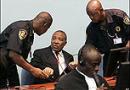
On the eve of Sierra Leone’s Independence Day, former Liberian President Charles Taylor was found guilty of war crimes committed during that country’s civil war. But does the verdict represent a major victory for Sierra Leoneans beyond its symbolic value?

The shocking news that the former Liberian strongman was indeed a CIA informant in the early years of his rise to notoriety calls into question America’s complicity in Taylor’s destruction of Liberia.
http://www.pambazuka.org/images/articles/308/charles-taylor.jpg Robtel Neajai Pailey questions the legitimacy of the Special Court for Sierra Leone and the international criminal justice system, which, she states: 'serves as a band-aid imprint of appeasement from the West, which is just as complicit in Africa’s civil wars as the warlords who have been indicted, Taylor included'.
The long awaited trial of fast-talking, charismatic warlord-turned-Liberian president Charles Ghankay Taylor was a dramatic tour de force in the complexities of international justice. Though Taylor is being tried on 11 counts of war crimes, crimes against humanity, and other serious violations of international law committed during Sierra Leone's 11-year civil war, the defendant himself was nowhere in sight for the first day of the trial, causing heads to turn, brows to furrow, and feathers to be ruffled. Taylor’s lawyer read a letter to the court in which his client called the trial a charade, riddled with deficiencies in representation for the defence team and inadequate resources. Taylor said the court has proven itself incapable of delivering justice because of blatant infringements on his rights, as evidenced by 'the insidious presence of a camera in conference facilities in the Detention Unit, overseeing meetings between lawyer and client that are supposed to be privileged and confidential'. The camera issue persisted for several months, without any safeguards from the Special Court administration, which has shown its inefficiency in performing the basic functions of legal proceedings. The obvious result was Taylor’s indignant absence: 'I choose not to be the figleaf of legitimacy for this process...', he wrote defiantly in his letter.
As I sat in the public gallery and media news room at the International Criminal Court (ICC) in the Hague on June 4, I could not help reminding myself that the events unfolding were not a melodramatic farce, but rather a foreshadowing of months to come in the complicated web of accusations and counter-attacks in the case of one of Africa’s most notorious warlords.
While some believe Taylor’s rebuff of the court de-legitimised the prosecution’s evidence against him, others, like Human Rights Watch, believe that the case sends a strong message that impunity will no longer be tolerated in Africa, or elsewhere.
Whatever your perspective, Taylor’s absence from the prosecution’s opening statements is symptomatic of broader issues of restorative justice, the power of representation, and an international system structured in dominance. Is Taylor a scapegoat for the international criminal (in) justice system, which still has a strong Western influence and funding channel? Who really bears the greatest responsibility for the atrocities committed in Sierra Leone? What about the crimes committed in Liberia? Why was the trial relocated to the Hague, when the crimes were allegedly committed in Sierra Leone? These and many more questions need to be explored adequately for a holistic picture to be drawn.
Background to the case
The Sierra Leone civil war began in 1991, initiated by the Revolutionary United Front (RUF) led by corporal Foday Sankoh, who exploited the country’s diamonds to fund his push against government forces. Civilians were targeted in an act of irrational retribution, in which tens of millions of thousands died, rapes and mutilations were rampant, and more than 2,000,000 people were displaced because of the 11-year conflict.
The UN backed Special Court for Sierra Leone was mandated in 2002 to try those who bear the greatest responsibility for the war that destabilised much of West Africa and stunted economic/political activity. Taylor’s indictment materialised in 2003 before he was granted political asylum by President Olusegun Obasanjo of Nigeria. It is alleged that in exchange for diamonds, Taylor provided the RUF with much needed arms and ammunition, manpower, military training, security and a safe haven in Liberia, as well as strategic and tactical advice, enhancing the junta’s ability to continue the war. The prosecution’s opening statements proposed to lay out the foundation of their case, stating that witnesses and documents will eventually present damning evidence that Taylor was responsible for the development and execution of a 'common plan' that led to death and destruction in Sierra Leone. 'The plan, formulated by the Accused [Taylor] and others, was to take over political and physical control of Sierra Leone in order to exploit its abundant natural resources and to establish a friendly or subordinate government there to facilitate this exploitation', said chief prosecutor Stephen Rapp, as he gazed pointedly at an empty seat that Taylor would have inhabited.
Some believe that Taylor should have remained in West Africa to face the victims of his alleged campaign of carnage. Others, however, believe that Taylor’s international network of contacts could have posed a threat to the stability of the region if his trial had remained in Sierra Leone. These concerns are legitimate, considering Taylor’s Houdini antics throughout the years. He 'mysteriously' escaped from a Boston jail in the mid-1980s and ended up in military training in Libya. In 2005, he 'disappeared' from his asylum residence in Calabar, Nigeria only to be found at the Nigeria-Cameroon border, before facing arrest in late March 2005. Supported by those who fear Taylor’s stronghold in the region, a swift overhaul of the trial to the Hague has proved problematic anyway, even though the Special Court for Sierra Leone requested the move. Whether on West African soil or within European jurisdiction, this case is complicated and sensitive.
Leading to the trial: A complex web of manoeuvres and counter-maneouvres
The capture of Taylor ricocheted a message across Africa that impunity will no longer be tolerated. After nearly two years of asylum in Nigeria, Taylor — handcuffed and scowling — was transported by UN military police to Sierra Leone at the end of March 2005. He appeared at the UN Special Court for the first time on April 3 to face charges for supporting Sierra Leone’s civil war. As I watched Taylor on screen after his capture at the Nigeria-Cameroon border, I could not help noticing that the warmonger looked visibly pissed, like he had been duped by a humiliating practical joke gone awry.
Except no one was there to say 'Just kidding, Chucky!' All of his playmates had disappeared, leaving the indicted prisoner in UN custody alone and crestfallen. Flashback to the summer of 2003, and a different vignette materialises altogether. Taylor stood draped all in white like a king on the tarmac of Liberia’s Roberts International Airport, waving and promising to return someday 'by God’s grace'. He was headed for political asylum in Calabar, Nigeria after being forced into exile by international condemnation and rebel factions campaigning for his departure.
The fact that Taylor briefly landed on Liberian soil three years later only to be transported to a UN military jet for an oh-so-eventful journey to Sierra Leone, and then the Netherlands to face war crimes charges, is one of the most twisted ironies of our time. In fact, the past two decades of Taylor’s life would be an intriguing epic. In a recent discussion with my cousin Edward Dillon, we managed to concoct a skeletal memoir filled with twists and turns that could land Taylor on somebody’s bestseller list. We figured that such a book would more importantly hold the key to his misadventures. It would serve as an exposé of sorts, explaining the extent of his ties to some of the big wigs of African politics and non-Africans alike. Taylor has been connected to Libya’s Muammar al-Gaddafi, Burkina Faso’s Blaise Campaore, Cote d'Ivoire’s late president Felix Houphouet-Boigny, former Ghanaian head-of-state Jerry Rawlings, and even US evangelist Pat Robertson, who signed a deal to mine an area in southeastern Liberia in exchange for Taylor’s 10 per cent share in the company. Taylor was armed with charisma, a West African entourage of cohorts and international connections to boot.
The indictments of Taylor’s West African networks were many. Sankoh died in prison from a heart attack and failing health while he was awaiting trial. Johnny Paul Koroma, who wielded control of the Sierra Leoneon Armed Forces Revolutionary Council (AFRC) that overthrew president Tejan Kabbah in a coup in 1997, is still at large. Notorious RUF field commander Sam Bockarie, who was killed in Liberia allegedly by Taylor’s command for fear of reprisal, was also indicted. Samuel Hinga Norman, former Sierra Leone Minister of Interior and head of the Civil Defence Force, was months away from a verdict, when he mysteriously died in prison. Though Kabbah eventually testified in front of the Truth and Reconciliation Commission in Sierra Leone, some argue that he was equally complicit in committing atrocities as Norman. Why was he not indicted? Similarly, Gaddafi of Libya has ingratiated himself into the favour of the US once again. Like most African leaders whose records are dubious in activist circles, he continues to receive the golden shield of impunity. Why was he not indicted for participating in the 'common plan'? It seems as if Taylor is the last man standing, and must be made an example of. But was he the most culpable? Enquiring minds want to know.
What about Liberia?
An ironic turn of events proves that it was the international criminal (in)justice system that enabled Taylor to commit crimes in both Liberia and Sierra Leone in the first place. Hurling a surprise critique at the UN for its mismanagement of the Taylor debacle early on, Liberian attorney Philip A. Banks said that 'if not for the UN, Mr. Taylor would have seen the jailhouse in 1992' for orchestrating the notorious 'Carter Camp Massacre' in which children and defenceless bystanders were killed in Liberia. Personally heading the investigation, Banks reported his findings to the UN in the early 1990s, after which the international body ruled that Taylor was not responsible. 'Under our law [Liberian law], Taylor would have been tried and brought to justice' long before he became president of Liberia in 1997, said Banks, who served as a lead drafter of the current Liberian constitution.
A conflict resolution arbiter during Liberia’s conflicts from 1990-1996, Banks censured the UN Special Court for Sierra Leone for its limited mandate. 'The authority granted to the court is circumscribed only to the crimes in Sierra Leone', he said in April 2006 at a press conference in Washington DC. According to Banks, the crimes that Taylor committed during his rebel war in Liberia from 1989-1996 were more extensively grotesque. 'Liberia is not getting out of the international intervention what it deserves', said Banks. He added that there needs to be a tribunal set up for Liberia to prosecute Taylor and his cronies, many of whom hold positions in the current Liberian government headed by Ellen Johnson Sirleaf. Activists argue that Taylor’s case is part and parcel of Liberia’s future post-conflict reconstruction development, especially if his accumulated stolen wealth - estimated at over US$2.5 billion - is returned to the country’s treasury.
More than meets the eye
Most coverage of the Taylor trial is devoid of critical engagement with the complex questions that bedevil the Special Court for Sierra Leone in particular, and the international criminal justice system, in general. Are truth and reconciliation commissions a Western conception of restorative justice? What about the gachacha courts in Rwanda, which serve as local mechanisms for prosecuting crimes? Just as the International Criminal Tribunal for Rwanda in Arusha, Tanzania, another UN-backed court system, is riddled with deficiencies, so too is the Special Court for Sierra Leone illegitimate in the eyes of many because it does not spring from the bowels of Africans themselves. Instead, it serves as a band-aid imprint of appeasement from the West, which is just as complicit in Africa’s civil wars as the warlords who have been indicted, Taylor included. After all, the same arms that were used to destabilise both Liberia and Sierra Leone can be traced to international networks in the US, Russia, and elsewhere.
Taylor’s fall from grace is reminiscent of a pantheon of notorious strongmen who have had to face the international criminal (in)justice system, among whom have been Slobodan Milosevic of Yugoslavia and Saddam Hussein of Iraq. What these three men have in common is one self-perpetuating node: an imprint of Western metaphysical guilt and disapproval. Once an enemy of the West, always an enemy of its court superstructure. Yes, Taylor’s trial serves as a precedent in its own right in Africa. But it should not be manipulated to serve the needs of legitimising an internationally funded and controlled criminal court thousands of miles away from the continent of Africa itself. Even African warlords-turned-presidents-turned-defendants deserve a fair trial.
* Liberian native Robtel Neajai Pailey is a graduate student at the University of Oxford, and a multi-media producer for Fahamu/Pambazuka News.
* Please send comments to or comment online at www.pambazuka.org
http://www.pambazuka.org/images/articles/301/firestone-child-labourers… England celebrates its 200th anniversary of the abolition of the slave trade, plantation workers in Liberia are trapped in a time warp of monumental proportions. They exist in the parallel universe of multinational corporate checkmate, where the prize goes to the highest exploiter. Robtel Neajai Pailey exposes the plantations of Firestone Rubber Company in Liberia.
Emmanuel B. is 30, a slender five foot three, and a slave whose piercing brown eyes tell unspeakable truths. He’s not the kind of slave we’ve seen in the collective imagination of 19th century plantations in the deep South of the United States. No, Emmanuel is a modern slave in 21st century post-conflict Liberia, and Firestone Rubber Company his unyielding master.
Like many workers on Firestone’s largest rubber plantation, Emmanuel was born in Harbel, has lived in Harbel all his life, and will most likely waste away in Harbel. Previously a student in Gbarnga, Emmanuel has ambitions to return to school, but those are pie in the sky dreams considering his family has no means of supporting him. As Westerners drive around in their heavy-duty SUVs propelled by another type of black gold—Firestone tires—Emmanuel wakes up at the crack of dawn to tap raw latex from 800 rubber trees daily. His clothes are tattered, and his shoulders covered in red puss-infected blisters from carrying buckets full of raw latex suspended from an iron pole to the Firestone processing plant two miles from his tapping site. For Emmanuel and his fellow tappers, a 5 a.m. start is the only means of filling their daily quota. Some have even begun to use their children to complete the herculean task.
Emmanuel sat perched like a statue, surrounded by green shrubbery and tall eerie splotched rubber trees one afternoon last December. He was taking a break, and had just finished tapping a record 800 trees when I spotted him while driving on a winding road on the Firestone plantation. He was gracious enough to demonstrate what a tapper does from sun-up to mid-morning. With a pitchfork suspended in the air, Emmanuel extended his long wiry arms to ease the raw latex out of the trees and into small red cups that catch the white liquid. The drip drip drip of the white coated liquid was almost as laborious to witness as Emmanuel’s daily task...another 799 trees to go and only five hours left. If workers don’t fill their quotas, their wages are reduced by half.
I visited the Firestone Rubber plantation for the very first time in December 2006 while on a research fact-finding mission for my dissertation. I decided to take a break from high browed academic work, and visit the sprawling modern day encampment I had heard so many horror stories about. It’s what I imagined the South to look like during the centuries of chattel slavery in the United States, with the hustle bustle activity of plantation life and the accompanying strokes of exploitation. As my brother-in-law, Christopher Pabai, and I pulled into the one million acre—and constantly expanding—plantation, we were welcomed by an ungodly stench, a stench I can only compare to the smell of rotten cheese. Not just ordinary rotten cheese, but the kind that has been drenched in burning oil, steamrolled on a conveyor belt, and neatly packaged for non-human consumption. That’s what raw latex smells like when it’s being processed. Rather than wearing masks to protect their noses from the assault, the plantation workers ingest the foul stench day in and day out. It took all my willpower not to retch all over Firestone’s perfectly manicured lawn or lush green golf course that senior management frequents while on hiatus from their back-breaking overseeing.
Believe it or not, the foul stench is the least of the workers’ worries.
While England celebrates its 200th anniversary of the abolition of the slave trade, plantation workers in Liberia are trapped in a time warp of monumental proportions. They exist in the parallel universe of multinational corporate checkmate, where the prize goes to the highest exploiter. Firestone has been playing the chess pieces of Liberia’s rubber slaves since the company signed a concession agreement with the Liberian government in 1926 to lease one million acres of land for six cents per acre—an abominable exchange given the astronomical dividends garnered from rubber sales then and now. In 2005, Liberia’s transitional government signed another concession agreement for an extra 37 years of rubber slavery. Rubber is Liberia’s largest export, and Firestone its largest international corporate exploiter, I mean employer, to date. The country and its people have paid a high price for the asymmetrical relationship.
In March 2007, the Firestone Rubber Company, a subsidiary of the Japan-based Bridgestone Corporation, won the Public Eye Global Ward for its social and ecological sins which demonstrate the shady side of pure profit-oriented globalization. The award was bestowed upon Firestone precisely because of the slave-like conditions on the plantation in Liberia. Workers live in dilapidated mud huts and are forced to seek the aid of their children in the strenuous and dangerous task of extracting latex from rubber trees. The deliberate and strategic use of children is against international laws including ILO Conventions, American and Liberian labour laws.
Since the plantation opened in 1926, company housing, mainly single room mud huts with no electricity, running water, or toilet facilities, has never been refurbished and updated to modern safety standards. Firestone’s plantation workers and their children toil under the same slave-like conditions they have endured for the past 80 years. The children’s labour usually includes cutting trees with sharp tools, applying pesticides by hand, and hauling two buckets on a pole, each filled with more than 30 kg of latex. Every day, these child laborers have to work long hours and are thus denied the right to basic education. Access to the company run schools is further impeded as parents must present a costly birth certificate in order to register their children.
Violation of child labour laws is only one among a long list of indictments against Firestone. According to Friends of the Earth USA, discharge from the company’s rubber processing plant has contaminated the adjacent Farmington River and other waterways, killing once vibrant ecosystems and polluting communities that depend on river water for drinking, bathing, and fishing. Furthermore, plantation workers are exposed to toxic chemicals and compounds on a daily basis while tapping. The merciless exploitation of Liberia’s people and natural resources by Firestone is directly linked to the nation’s impoverishment as the raw materials produced in Liberia are sent elsewhere for processing, thereby shutting out the possibility of added value. If a processing plant is built in Liberia, it could revolutionize the way rubber is used within a continent in dire need of manufactured goods such as condoms in the heyday of Bush’s conservative AIDS funding policies.
Clear violations of the law prompted a legal complaint filed in November 2005 against Bridgestone Corporation and Bridgestone Firestone North American Tire, LLC by the International labour Rights Fund (ILRF), a member of the Stop Firestone Campaign which is an advocacy coalition launched in 2005 to highlight Firestone’s exploitative undermining of Liberian labour laws. The 35 plaintiffs either have been or are currently child labourers on the company’s rubber plantation in Liberia. They describe their lives as “trapped in poverty and coercion.” The plaintiffs have brought their case to a U.S. court since Liberia’s legal system eroded during 15 + years of civil war and strife. The case is currently ongoing.
The ILRF, along with its Stop Firestone Coalition partners, demands that Firestone:
- provides workers with basic rights, including a living wage and the freedom of association;
- ends all child and forced labour and assigns achievable quotas;
- adopts health and safety standards; stops exposing workers to toxic compounds and chemicals;
- improves housing, schools, and health care centres to provide safe and comfortable facilities;
- ensures public disclosure of revenue and all types of foreign investment contracts;
- stops releasing chemicals into the environment and redresses all environmental damage; and
-publicly discloses the identity and quantity of all toxic compounds that it releases or transports.
Liberia’s Minister of Labour, Kofi Woods, a long-time human rights activist/lawyer and a major catalyst for the Stop Firestone Campaign, has been in rounds of renegotiation sessions with Firestone representatives recently in Washington, D.C. Because of his list of demands—which are reminiscent of the Stop Firestone Coalition demands—Firestone representatives stormed out of the meetings in March 2007. Go figure. Woods and his cohorts are what I imagine African legislators should be like, uncompromising and unyielding when it comes to corporate social and ethical responsibility. Liberia’s post-conflict reconstruction agenda will be null and void without a reconfiguration of the concession agreement with Firestone. After all, any post-war scheme involves a drastic revving up of the national economy, and given Firestone’s economic entrenchment in Liberia, it will need to refashion how it deals with Liberian workers, thereby increasing employee profit margins.
History challenges us to stay on a forward moving dialectic of change. The Firestone example shows us that an ironic distortion of that dialectic is taking place right under our noses. Slavery ain’t dead, it’s manufactured in the rubber we use daily. We owe it to Emmanuel and his comrades on the Firestone Rubber plantation to change the course of history, to make a clean break from modern-day slavery and its peculiar 21st century manifestations. We owe it to ourselves.
For more information on the Stop Firestone Campaign, visit
Listen to Robtel Pailey's interview with Liberian Minister of Labour Kofi Woods and activist Ezekiel Pajibo about the role of Firestone tyre company in Liberia in this weeks [email protected]
Eating disorders seem to be a rarity in the issues raised by contemporary African writers. That’s most likely why Tsitsi Dangarembga’s 1988 classic “Nervous Conditions” became an immediate modern African classic. It was a semi-autobiographical coming-of-age story about the affects of patriarchy and colonialism on a female protagonist, Tambudzai. Nyasha, Tambudzai’s cousin, suffers from an acute case of bulimia. In many respects, she attempts to regurgitate centuries of societal repression of African women’s bodies, livelihoods, and intellectual capacities.
Like Nyasha, Dangarembga has been regurgitating historical tyranny with creative genius. She is a Zimbabwean playwright, novelist, and filmmaker who tackles head-on the oppression wrought by patriarchy and colonialism on African women. Her most recent novel, “The Book of Not,” is a sequel to “Nervous Conditions.”
Dangarembga could be called a feminist, but she shies away from the loaded term, opting for something more holistic, humanist. The Informer interviewed Dangarembga recently about writing, African women’s empowerment, and continental development.
Robtel Neajai Pailey (RP): Your large body of work shows that in the grand scheme of things, gender matters to you. How did you become so interested in the convergence of gender, oppression, and Africa?
Tsitsi Dangarembga (TD): Gender matters to me because I am a woman and experience firsthand the oppressive consequences of gender discrimination. I spend a lot of my considerable energy fighting that, and I think, why do I have to waste so much on this fight? I am sure most women all over the world ask themselves that question daily. Think how much energy is dissipated in this useless manner. It is energy that could be harnessed for the good of all people in a world free of gender oppression. I experience similar oppression as an African person. Naturally, I see similarities, but then again, also differences in these two systems of oppression. I spend a lot more time and energy trying to tease out which oppression fits so I can combat it appropriately, win and move on. I think that kind of intellectual work can be a legacy for others, hopefully shortening and easing their struggles.
RP: “The condition of the native is a nervous condition” seems to be the hallmark of your 1988 novel, “Nervous Conditions.” Was this one line in “Nervous Conditions” some type of tribute to Frantz Fanon and his book “Wretched of the Earth?”
TD: It was not a tribute in the sense that I wanted to draw attention to the greatness of “Wretched of the Earth.” It is, however, a tribute in the sense that that quotation affirms the truth that Fanon wrote, whose essence was captured so aptly and so succinctly by [Jean-Paul] Sartre in his introduction to Fanon’s work.*
RP: How are African women and girls today still victims of White supremacy and patriarchy?
TD: My new novel “The Book of Not” deals with this theme. The relationships are too complex to reduce to a few sentences, I think. When we do that, we miss essentials that need to be looked at. So I have taken many years to work this out to my satisfaction and also depict it to my satisfaction in “The Book of Not.” Personally, I feel both systems still work to victimize me. I think it is not an accident at all that most strong African women find they can only move forward in the company of other strong African women. Thank goodness for the sisterhood! Having said that, of course I do not want to portray the rest of the world as a homogenous monstrous lot! Neither could I as an African woman manage without the support from allies who have institutional access to institutionalized power and resources. Such people have kept me and my work—both my personal work and the work that I do as part of the African women’s movement—alive.
RP: I understand that you studied medicine and psychology at Cambridge University in England. Can you describe the psychological manifestations of patriarchy and neo-colonialism on African women and girls (besides eating disorders)?
TD: Low self-esteem; under performance; anti-social behavior; role modeling on anti-social hitherto traditionally masculine behaviors; negative energy; learned helplessness; rage; addiction; alienation; psychological disturbances from neuroses to psychoses; lethargy; dysfunctional attitudes; suicide; self immolation…to name a few.
RP: You’ve become increasingly aware of the difficult conditions and oppressive attitudes endured by Black women in Zimbabwe. I dare say you’ve been increasingly aware of the difficulty endured by African women all over the continent. What are some of the contemporary challenges African women face? What do you believe are some solutions to these challenges?
TD: Economic conditions in our global capitalist world are the main challenge. This translates practically into challenges of food security, health, shelter, education…again, the list goes on. There is also the challenge of how to make sure your voice is heard to voice these issues, both by those who want to hear you and by those who do not. This also at the end of the day translates into a challenge of financial resources. Few African women have the financial security to write the novels they want to write, make the films they want to in order to be heard, make the radio programs they see as crucial to their development and well being. We do not have the resources to ensure that these programs are aired even if we are able to make them. We often do not have the time to write the newspaper article we want to because they often will not be published in our newspapers and so we will not be paid, or if the articles are published often again a male chauvinist spin is put on them. Nor do we have our own newspapers. Again, it is not a monolithic African woman-hating world out there, but the opportunities are too few to sustain us at the level we have reached, let alone sustain our continued well-being and development in the face of our challenges.
RP: Please comment on how the tenuous political and economic conditions in Zimbabwe have affected women in the country.
TD: The political situation has affected most women badly in every sense. As in all crises situations there are some who exploit the suffering of others to benefit from it, and some of these exploiters who benefit are women. However, on the whole, women have seen the gains they made since independence in 1980 whittled away over the last few years. There is less food security. Girl children are less likely to be educated. Shortages of basic commodities make a mother’s life a nightmare. Biologically, women are challenged again. How are women to afford to buy the sanitary wear they need to soak up menstrual blood? As men are affected by the difficult conditions, they take out their frustrations on the often physically weaker sex. Sexual crimes and other violent crimes against women and children are accelerating at an unspeakable rate. The HIV pandemic multiplies the horrific implications of this situation a million times. Because of international sanctions, amongst other things, there are no medicines, little food, and what is there is hardly healthy. Only vestigial sanitation in most areas, almost no clean water in others. Even the cities go for days without water, to say nothing of fuel. I do not understand the logic that believes Zimbabweans will suffer these deprivations and become better, more democratic peoples. In my reading of history, a democratic nation has never been a hungry, suffering nation. Democracy seems to me to have been positively correlated with comfort. I do not think I am the only person who has read history, and so I wonder about the diverse agendas that are destroying my country in the name of democracy and human rights. There may as well be other factors at play which are destroying Zimbabwe, such as avarice, corruption and lack of accountability, but I do not think we must study all the factors and their impacts if we truly desire a solution, and not be selective about which truths we will face and which we will not.
RP: Over 15 African countries have ratified the Protocol on the Rights of the African Woman, which stipulates a series of recommendations for women’s rights on the continent to be adopted by the African Union. Are you familiar with this Protocol? If not, what recommendations would you include?
TD: Over the years there have been so many protocols and statements on human rights and women’s rights that I have lost track. I have not seen that these do a great deal to benefit the lives of women and the people close to women on the ground, beyond the NGOs and others involved in the drafting, funding, and implementation. Again, that is not to say that these actions have achieved zero impact, but I do not think that isolating women’s rights without addressing the larger picture of Africa and globalization will yield positive results. At the end of the day, African women and men have to live together in peace and harmony. This will not be achieved by looking only at the needs of one group.
RP: What would you say are some of the major contributions women in the developing world have contributed? What have African women contributed?
TD: I think African women who have made their mark in the world have shown what degrees of human strength are possible. They have shown us how to persevere, never give up, and simply never ever take NO for an answer, if the answer should be YES.
RP: Perhaps African American women writers such as bell hooks, Angela Davis, Toni Morrison, and Zora Neale Hurston are your counterparts in terms of writing from a particular ethnic and gender lens. Have these women at all influenced your work?
TD: Absolutely! All of them have. I remember being so impressed by Angela Davis’ Afro and the fact that she had been in jail! I thought, how can a woman in America have to go to jail? Then I read and found out why. It was good to realize that what I was beginning to notice going on around me was not my own little secret shame because I was not good enough at a personal level. I love bell hooks for writing about the rage that makes you want to kill, but then having to not kill and do something else instead that is life affirming, and, I imagine, infinitely more rewarding even if it seems at first to be infinitely more difficult than murder! Zora Neale Hurston simply stunned me by saying out, just like that, what she had to say. As for Toni Morrison, she is my ultimate literary role model. I remember telling my publisher how at first I was perplexed that each of Morrison’s novels were in a different voice. As a reader who had enjoyed one of her works, I craved a continuation in the next one. But then as I continued to read, I found that that was one of the marks of genius.
RP: In tandem with African women writers such as Buchi Emecheta, Ama Atta Aidoo, and Mariama Ba, you’ve managed to reconstruct the experiences of African women through the literary medium. What do you see as the role of African women writers today?
TD: Well, I write to tell a story. I think people like stories because they serve such a variety of purposes ranging from entertainment to information, to role modeling to catharsis.
RP: What is your latest novel about? How has publishing abroad been a challenge and a boon simultaneously?
TD: “The Book of Not” continues the story of Tambudzai Siguake, the narrator of “Nervous Conditions,” and her quest towards becoming herself. This journey almost comes to a premature end at the Catholic Convent School she attends in Rhodesia [now Zimbabwe]. I like to think, however, that she survives. Publishing abroad is useful because you reach a wider audience. Books published first in Zimbabwe are not automatically picked up by international publishers. I am still looking for a Zimbabwean publisher, though. I love touching the people around me, and stirring them to something.
RP: What would you say are your greatest accomplishments?
TD: Staying alive, healthy and happy. Loving my family and finding compassion.
*The title of “Nervous Conditions” is borrowed from Jean-Paul Sartre’s introduction to Franz Fanon’s “Wretched of the Earth.” The ‘nervous condition’ of the native is, according to Sartre, a function of mutually reinforcing attitudes between colonizer and colonized that condemn the colonized to what amounts to a psychological disorder.
•This article first appeared in The Washington Informer and is reproduced here with permission. Robtel Neajai Pailey is the Washington Informer Assistant Editor.
•Please send comments to [email protected] or comment online at www.pambazuka.org
In late 2005, the International Labor Rights Fund filed an Alien Tort Claims Act case in the US District Court in California against Bridgestone, alleging "forced labor, the modern equivalent of slavery" on a Firestone Plantation in Harbel, Liberia. The lawsuit states: "The Plantation workers allege, among other things, that they remain trapped by poverty and coercion on a frozen-in-time Plantation operated by Firestone in a manner identical to how the Plantation was operated when it was first opened by Firestone in 1926." Robtel Pailey investigates modern-day slavery in the "land of the free".
In the early 1820’s, Liberia transformed into a land of exile for repatriated American slaves. In fact, the country was a proverbial refuge from the dehumanizing, deplorable conditions of chattel slavery in the United States. So any mention of the word “plantation” should have Liberians visibly shuddering from the historical legacy that many of its descendants endured.
Ironically enough, a recent development suggests that Liberia itself has served as a breeding ground for modern day slavery disguised in the form of what some would call indentured servitude for the American corporation, Firestone. Declared Africa’s first republic in 1847, Liberia has been embroiled in an asymmetrical relationship with the rubber giant since the corporation first landed on the shores of the country in 1926. Eighty years later, human rights groups have sidestepped Firestone’s alleged abusive practices and lodged a class action suit against the American company for violations of child labour laws, cruel and unusual labour practices, and environmental degradation. Practices, they claim, are no different from the moment the plantation opened. Since 1926, Firestone has allegedly relied on forced labour, involuntary servitude, recklessness, negligence in hiring and supervision, unjust enrichment and unfair business practices.
The lawsuit, filed on behalf of workers and their children at the plantation under pseudonyms, names Japanese parent company Bridgestone, Bridgestone Americas Holding, Bridgestone Firestone North American Tire and other units as defendants.
The International Labour Rights Fund (ILRF) filed the class-action suit in the name of 12 Liberian workers and their 23 children, who remain anonymous to protect themselves from retaliation. The plaintiffs are bringing their case to the US because the Liberian judicial system has been eroded in the mire of civil breakdown. “The plantation workers are stripped of rights, they are isolated, they are at the mercy of Firestone for everything from food to health care to education, they risk expulsion and certain starvation if they raise even minor complaints, and the company makes wilful use of this situation to exploit these workers as they have since 1926,” the lawsuit claims. ILRF and its allies - Liberian human rights lawyers and activists - serve as an advocacy apparatus for the health and legal rights of Firestone workers in Harbel, Liberia.
The history of Firestone in Liberia is revealing. In 1926, the company signed a concession agreement with the government of Liberia for a period of 99 years. That agreement covered one million acres of land, leased for six cents per acre for a total annual price of $60,000. Large sectors of the indigenous population were displaced to pave the way for setting up Firestone’s largest plantation in Harbel. Even in the company’s infancy, Liberians were recruited to provide forced labour to harvest and cultivate the rubber trees, after which they engaged in “tapping,” the labour-intensive act of using primitive tools to tap the raw latex out of rubber trees for export. Labourers were initially conscripted at gunpoint, and many of the descendants of those labourers serve as plaintiffs in the case against Firestone today.
Despite a surge of civil dissent and democratic outcries in 2005, Firestone signed a new 37-year agreement with the Transitional Government in Liberia to lease the land for 50 cents per acre, a “hike up” from the original leasing agreement. According to a recent report published by the Save My Future Foundation, Firestone exported 167,165 tons of rubber between 2000 and 2003. The price of rubber reaches astronomical highs today at $486 per ton. In the measurement of trade regulations at present, Firestone is receiving $81,242,190 from its production in Liberia. All of the rubber produced in Liberia is sent to the United States for processing into tires, and other materials. No processing, manufacturing, or other value added production is done in Liberia.
The level of poverty in Liberia is so astonishing that people flock to the plantation for a mere pittance. The average tapper generates $900 monthly for the company yet receives barely a tenth of that as compensation from Firestone once fees and services are deducted from wages. As a result, the tappers slog for a mere $3.19 a day. After having worked for Firestone for over 50 years, some retired plantation workers apparently collect less than $50 a month in pension earnings.
Aside from dealing with the poverty of indentured servitude, Firestone labourers must contend with health-related infirmities. The tappers expose their eyes to the potentially blinding latex, applying dangerous pesticides and fertilizers to the rubber trees. The raw latex from the rubber trees is fatal when applied to the eyes, as there have been countless reported cases of workers suffering from permanent eye damage due to exposure. They are forced to carry 75-pound buckets overflowing with the collected latex quota of the day. Unschooled about the dangers of the products they are handling, the workers know not to ask for safety equipment. Many of the tappers have severe scars and bone muscle abnormalities as a result of the tapping.
The labourers work 12-15 hour days, then must enlist the help of their families (including young children and wives) to complete a daily quota in order to ensure a weekly wage. No days off, no paid holidays, no sick leave. A shameful phenomenon in the Firestone scheme is its implied support of child labour. Most of the children are working on the plantations instead of attending school. The few that do attend go to substandard schools in dilapidated conditions. Firestone claims that it provides free education to the children of its workers, but in actuality the workers must pay an income tax automatically deducted from their monthly wages to cover the costs of so-called educational expenses.
The children and their families toil on the plantation by day, and return to the squalor of primitive living conditions at night with no electricity or running water. Firestone blames the country’s more than a decade long civil war for the breakdown of infrastructure, yet members of the Firestone clan aided and abetted the rebel leader-turned president Charles Taylor so as to avoid damage to the plantation when the war raged on. Some of Taylor’s rebel armies were even stationed at Harbel, enjoying the fruits of their fellow countrymen’s literal blood, sweat, and tears.
Miles away from the deplorable living conditions of the Liberian labour force, the company’s managerial staff benefits from the rubber wealth, luxuriating in air-conditioned bungalows and even stopping from their “backbreaking” work as overseers to play a round of golf on the erected course nearby. Mud huts and shanty huts coexist with big, immaculate looking makeshift houses. Firestone claims that the mud huts that exist on the land were created by internally displaced Liberians who flocked to the plantation during the height of civil war in the country. Yet, Firestone owns the land and retains all the responsibilities of its upkeep. Furthermore, some of the conditions existed before the civil war and were entrenched for years.
The entire scenario represents a microcosm of inequitable trade rules benefiting large Western corporations that exploit raw material within the developing world, leaving the indigenous people with environmental spills, physical ailments, and broken morale. The Firestone case in Liberia is a microcosm of American corporate takeover and a flagrant disregard of indigenous rights. It is an extension of the transatlantic slave trade, and should be exposed as such.
* A native of Buchanan, Liberia, Robtel Neajai Pailey currently serves as Assistant Editor of The Washington Informer, a Washington, D.C. based community newspaper.
* Please send comments to
